

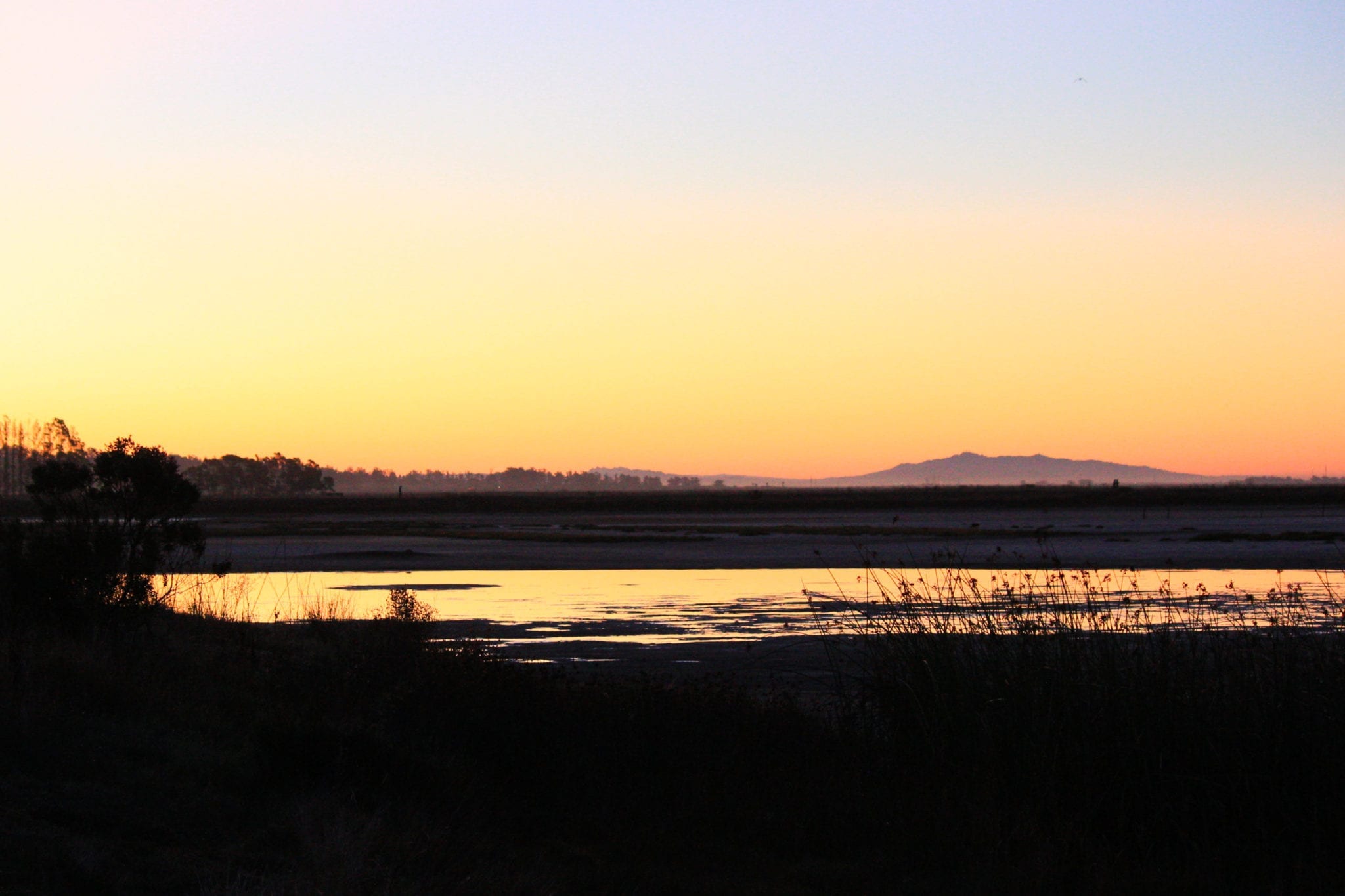
Monday, October 21, was the bimonthly bird survey at Shollenberger Park. The sunrise greeted us with the promise of a wonderful day at Shollenberger Park for October’s Petaluma Wetlands Alliance (PWA) survey.
There’s something magical about standing quietly under dawn’s dimly lit sky as it grows brighter by the minute. We scanned the skies for birds relocating from their morning roost, and watched a small flock of geese flap by in a loose “V” shape.
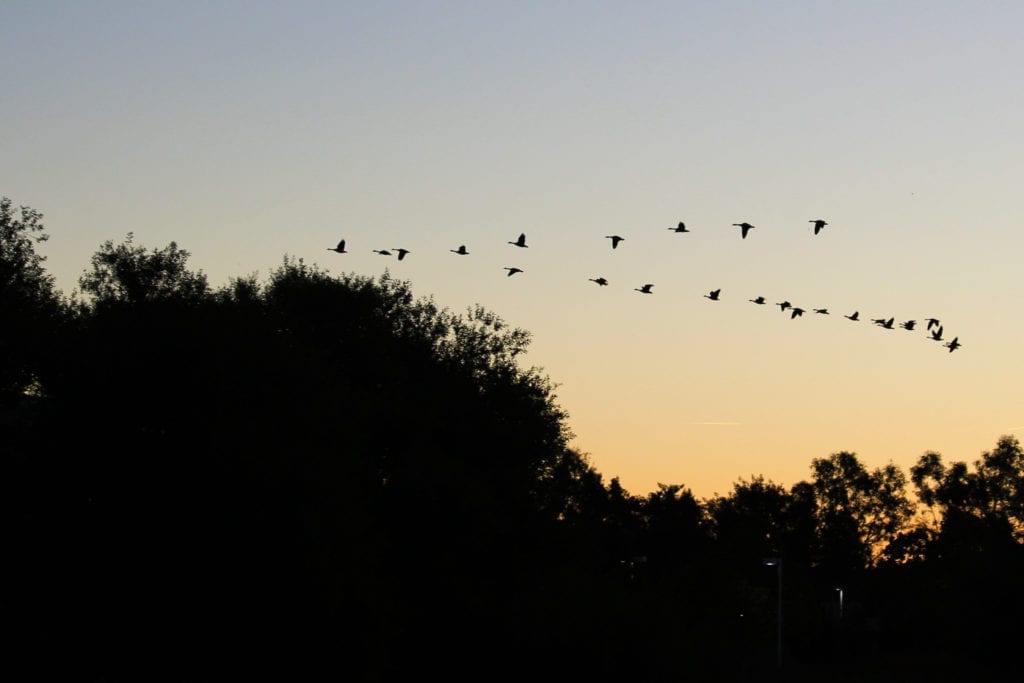
Good morning!
We listened to the birds warm up their syrinxes as the sky lightened. A small group of Red-winged Blackbirds let out a variety of whistles, beeps, and squeaks.
The morning’s winner of “King of the Light Pole” was this beautiful adult Red-shouldered Hawk.
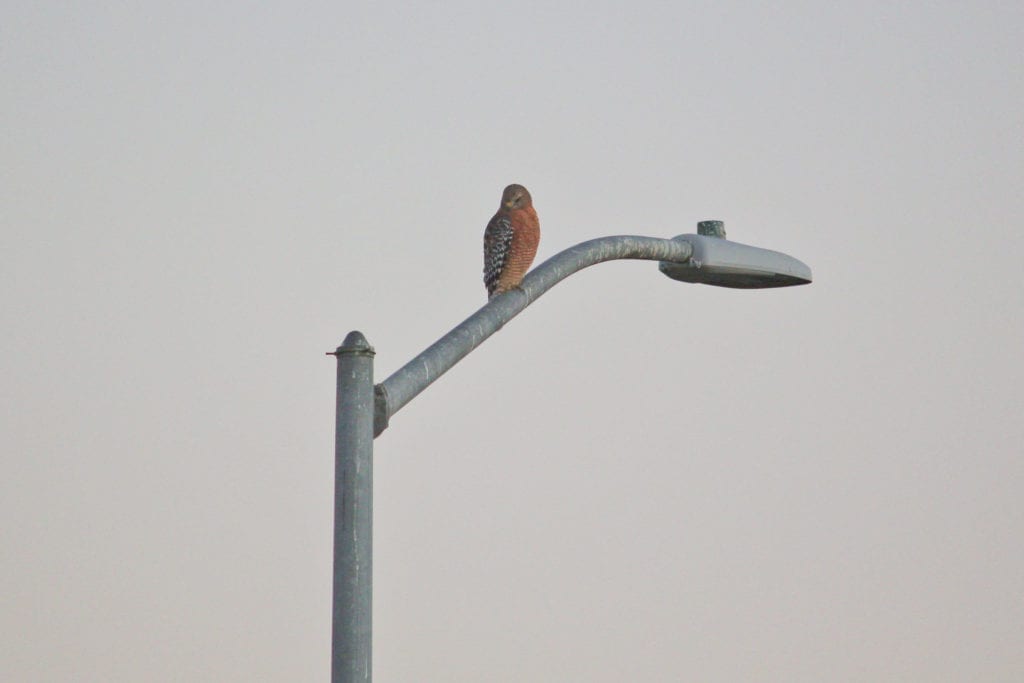
Red-shouldered Hawk
A bird is colored and patterned the way it is for a reason. Often, it’s to blend in to its surroundings as well as possible, to avoid detection by predators. The streaky, muted American Pipit disappears into its preferred winter habitat of grasslands and mudflats.
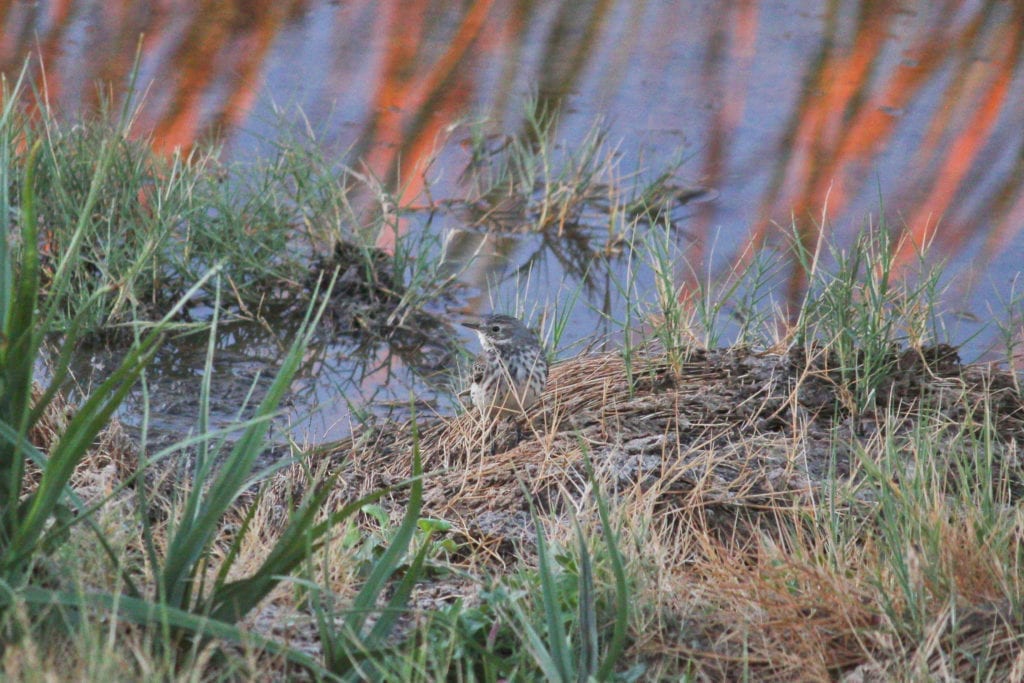
American Pipit
Greater Yellowlegs often announce their arrival via piping, whistled “tew-tew-tew” calls. Below, you can hear two birds calling as they circled overhead before landing in the main pond.
A nice surprise of the count was a lone White-faced Ibis foraging in shallow water. Wonder if this was the same solitary White-faced Ibis we observed at Ellis Creek a week prior?
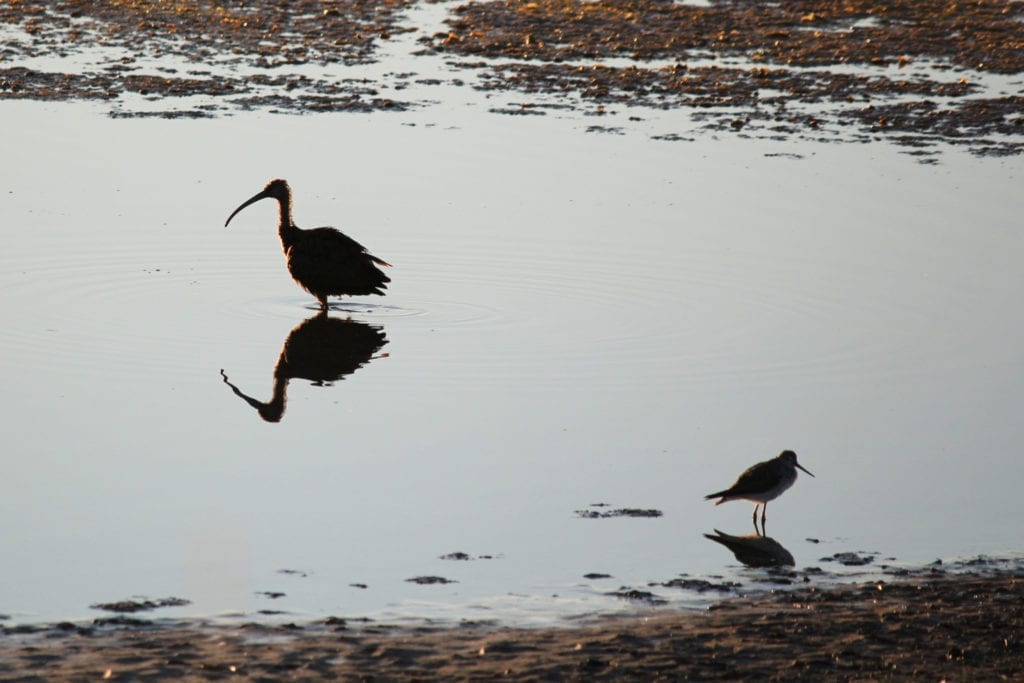
White-faced Ibis and Greater Yellowlegs
The soft morning light and still water made for some neat reflection shots.
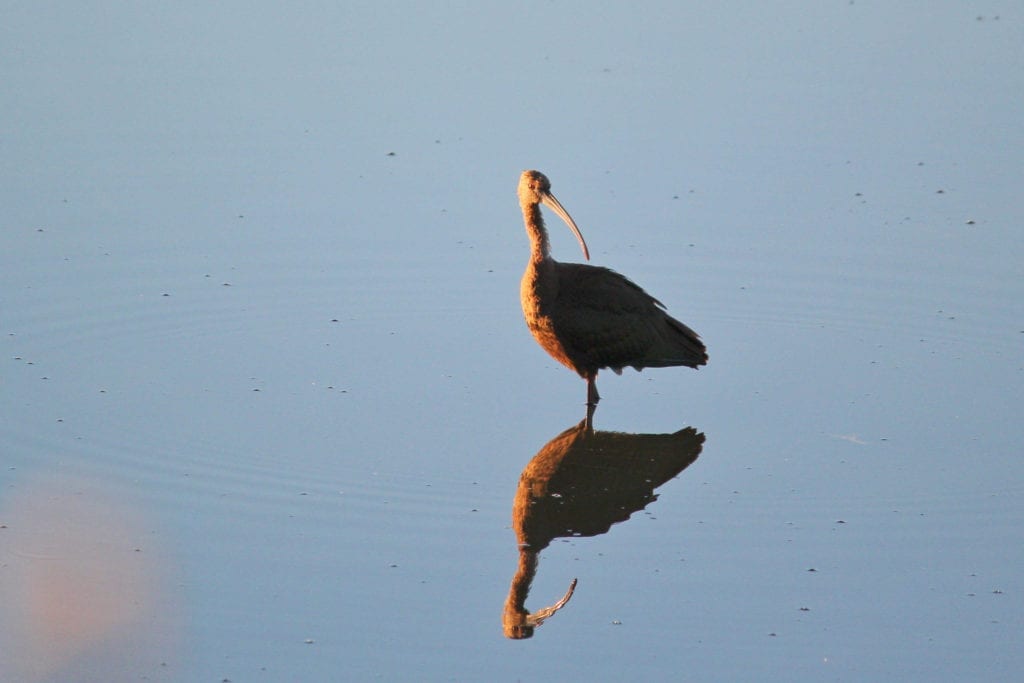
White-faced Ibis
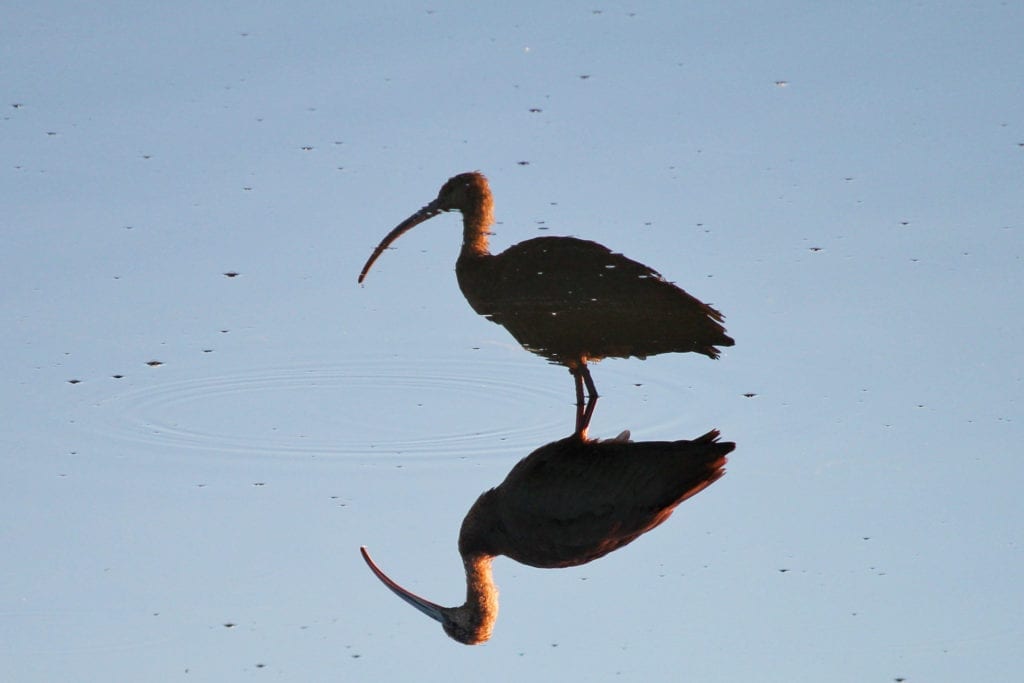
Upside-down or right-side up?
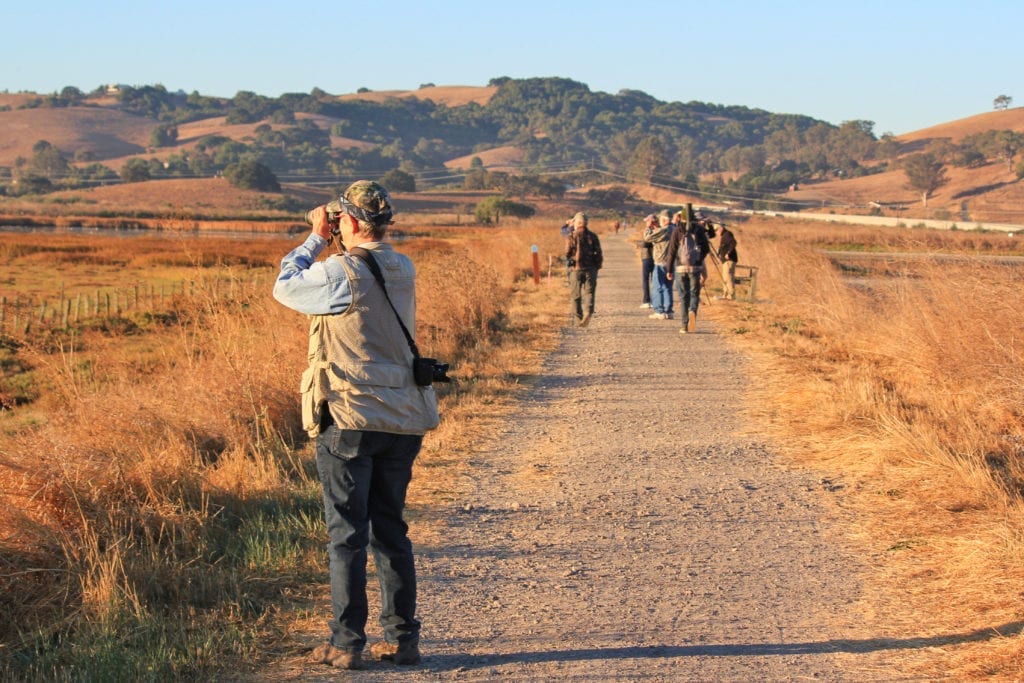
Deb peering at the distant mudflats
Along the stretch of trail extending southwest from Point Blue, multiple Virginia Rails called and we recorded this Sora whinnying.
This Great Egret and Snowy Egret gave us a nice side-by-side comparison view. The photo also captures their distinctly different foraging styles: the Great Egret is upright, standing stock still, while the Snowy Egret is hunched over, on-the-move, stirring up the water.
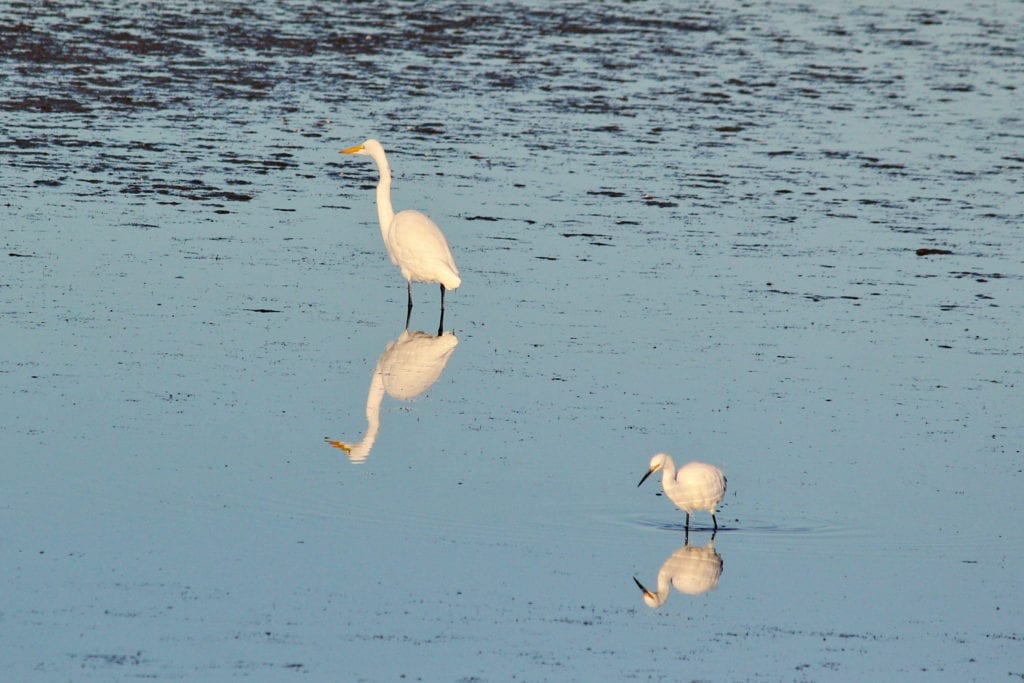
Great Egret (L) and Snowy Egret (R)
We encountered a Marsh Wren in plain view on the withering fennel.
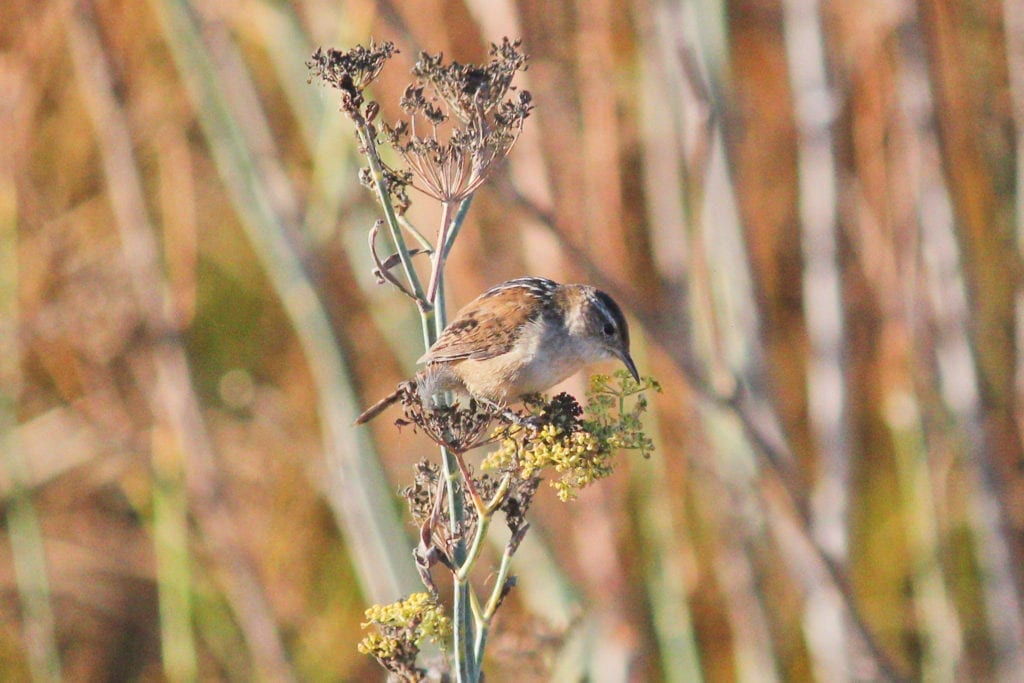
Marsh Wren
Who’s this cutie peering over the grass?
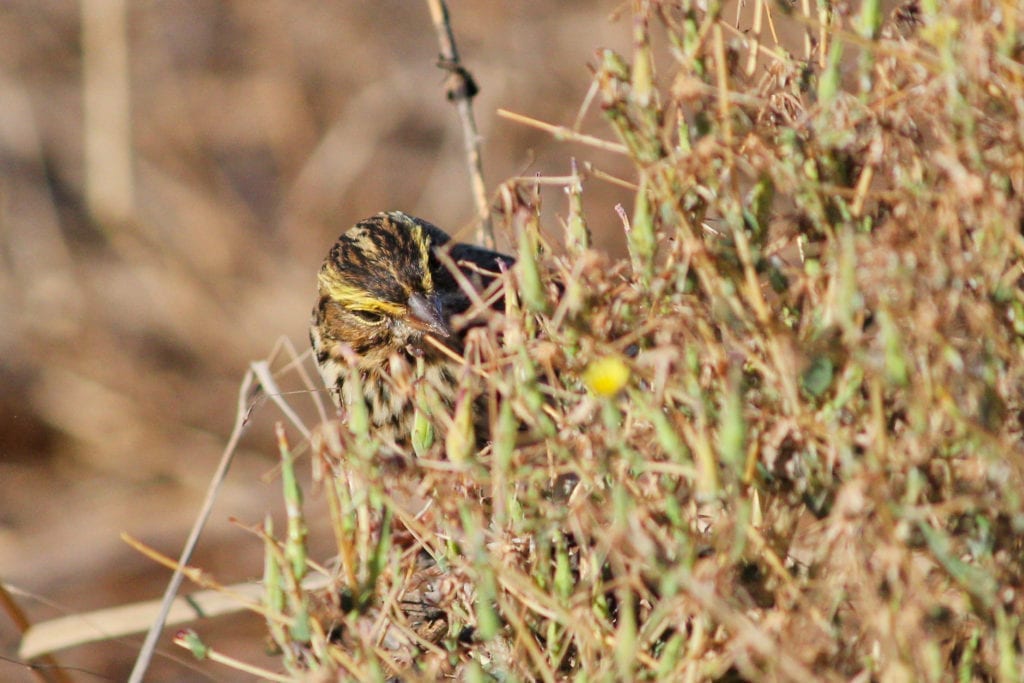
Oh, hi there!
It’s a Savannah Sparrow! As we observed quietly, this typically shy sparrow eventually hopped close while foraging, just feet from us in the dry grass.
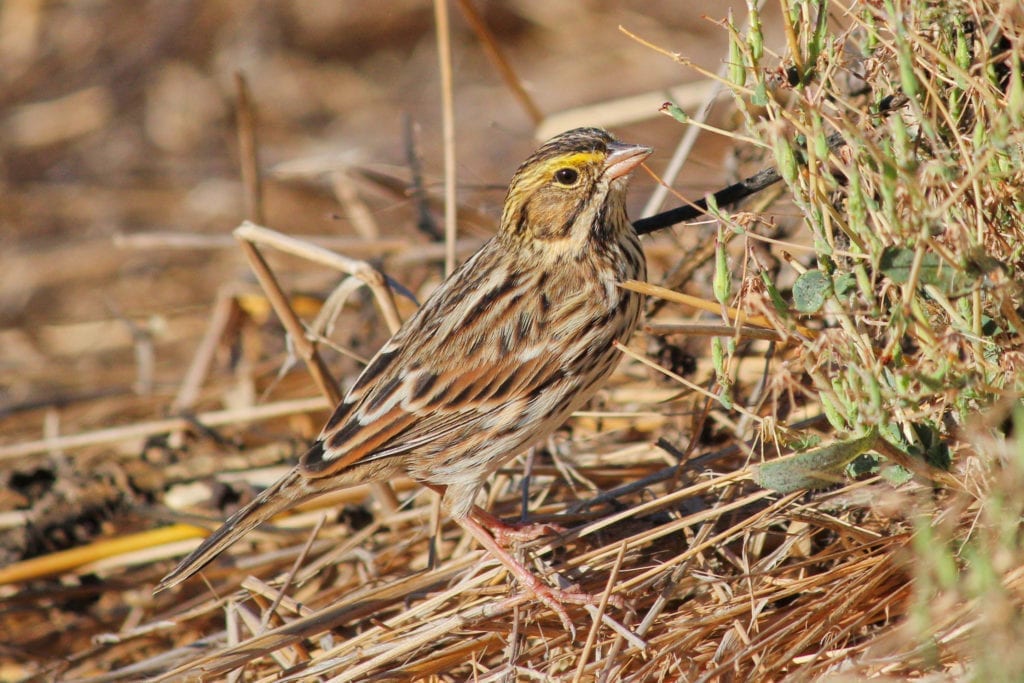
Savannah Sparrow
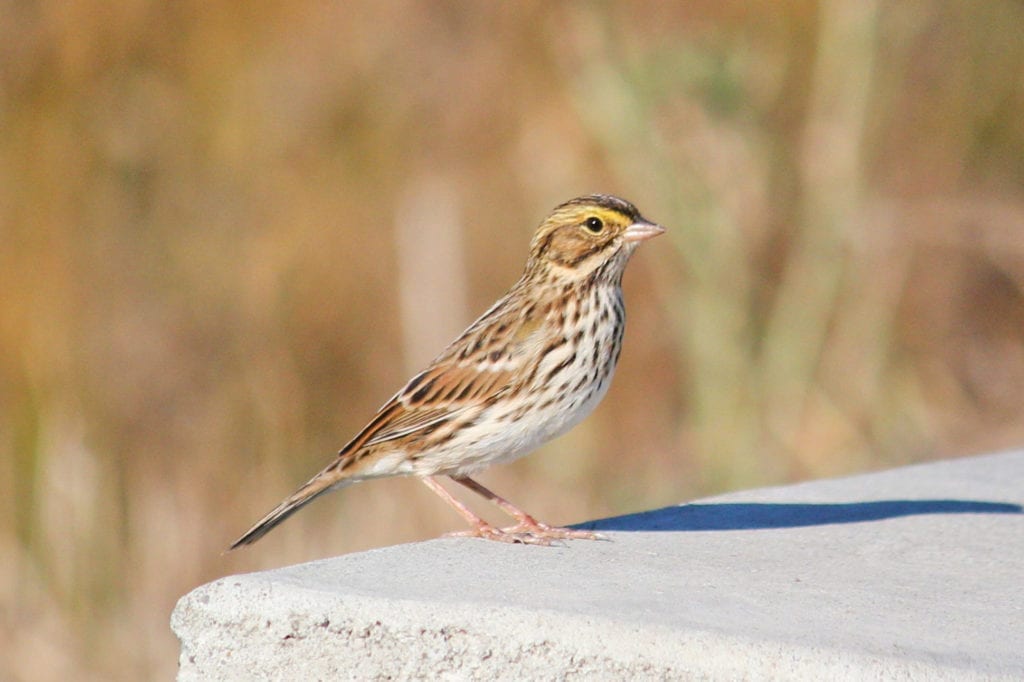
Very bright yellow lores on this particular individual
A female Northern Harrier (formerly known as a Marsh Hawk) hunted appropriately above the marshy grass as we passed by on the trail.
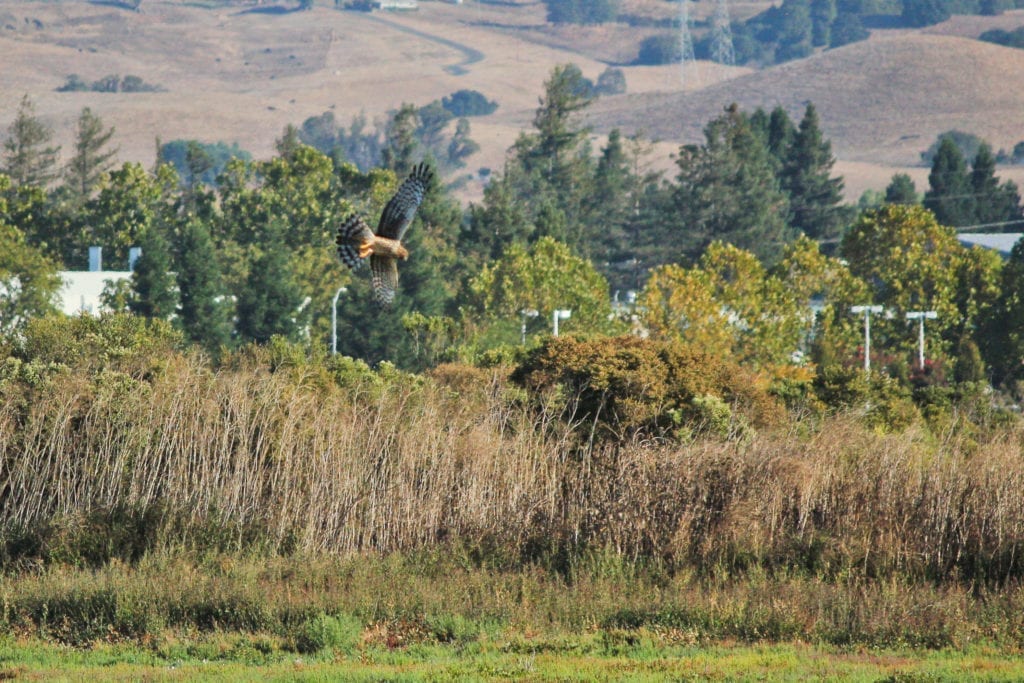
Northern Harrier
This Snowy Egret gave us nice looks at its extended legs and retracted “S”-shaped neck.
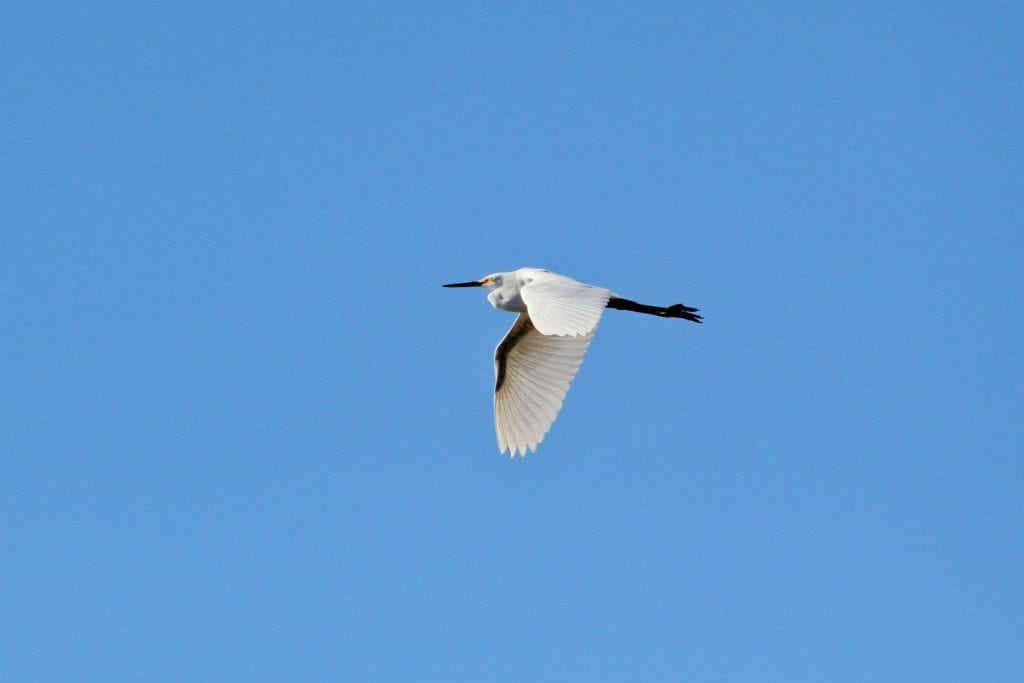
Snowy Egret
The group came across a fresh, dead fish on the trail – wonder which bird dropped it?!
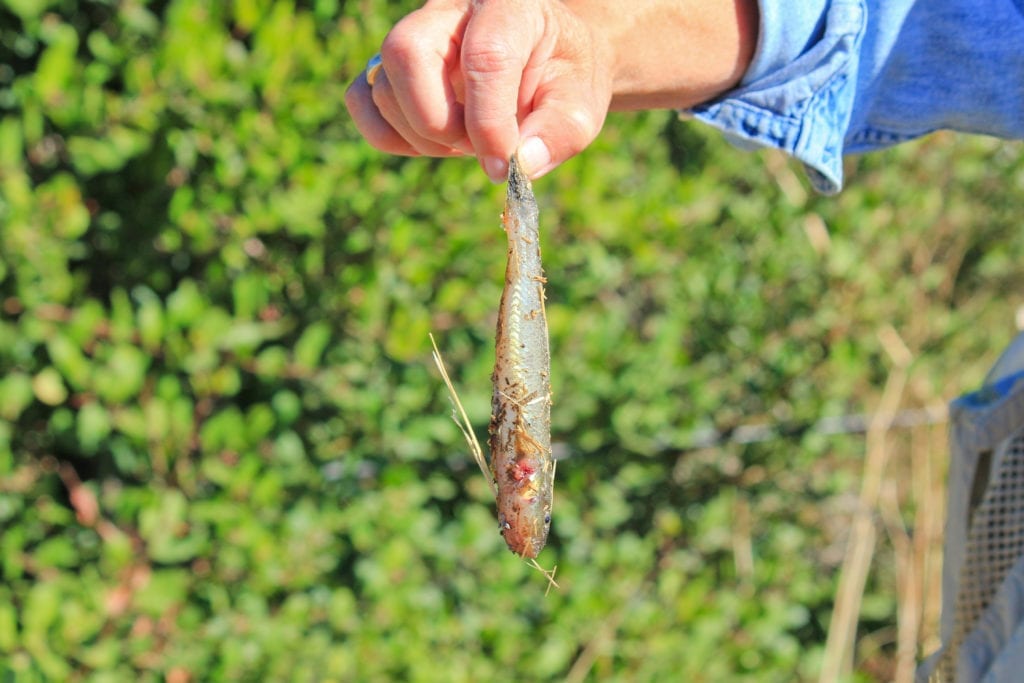
Big thanks to Deb for picking the fish up to display it 🙂
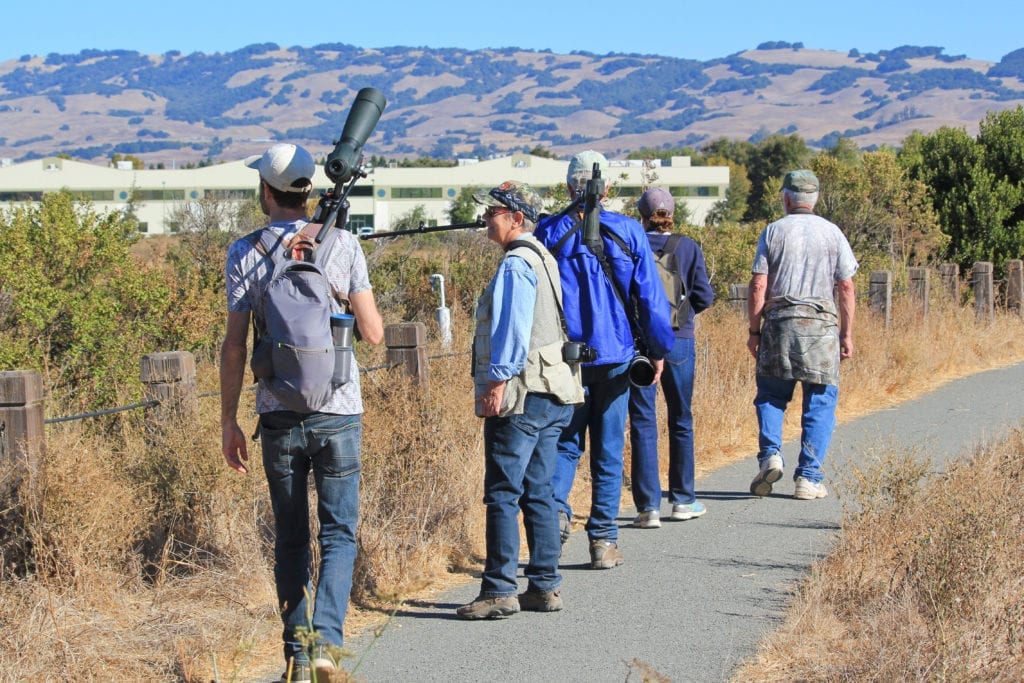
Miles, Deb, Malcolm, Mary, and Andy on the homestretch
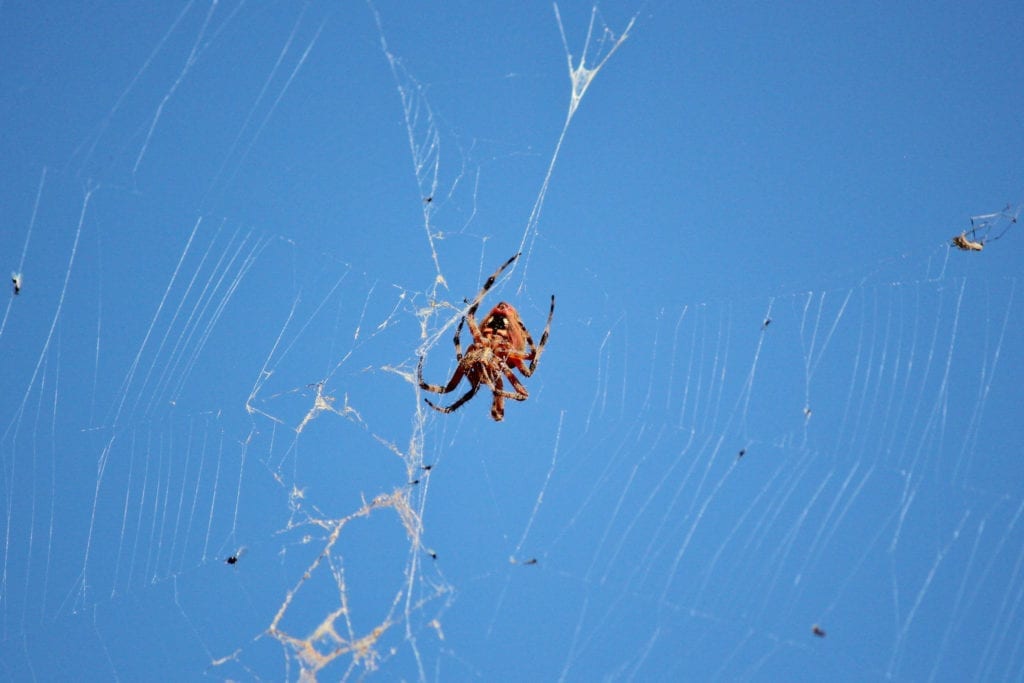
Spotted Orb-weaver
This White-crowned Sparrow drooped its wings, exposing its plain-brown lower back and rump – quite a contrast from the heavily streaked upper back.
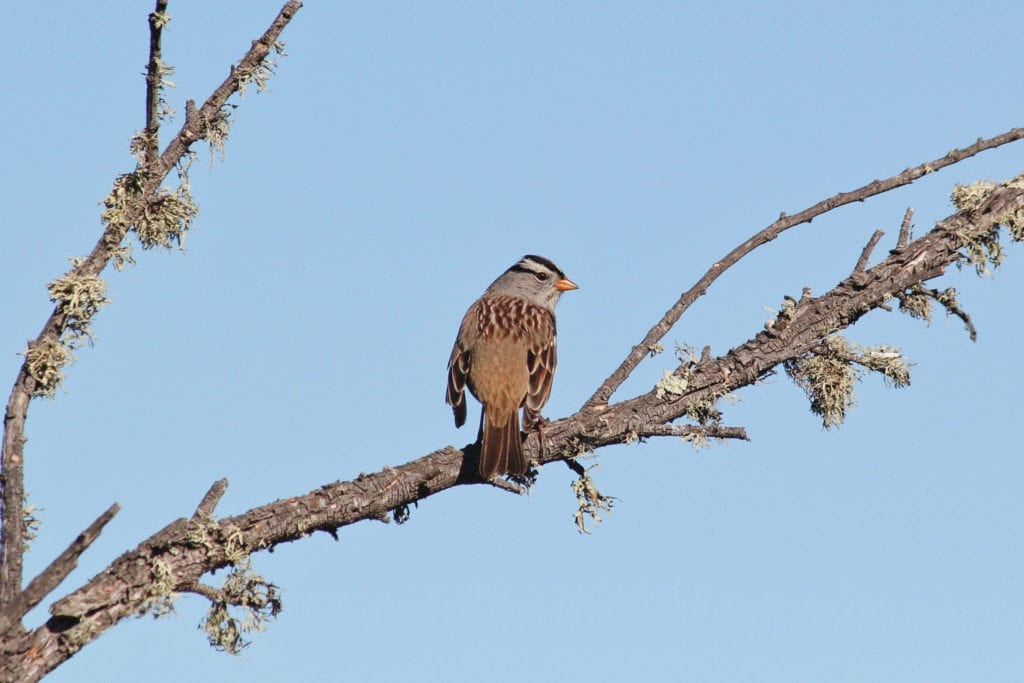
White-crowned Sparrow
Towards the end of the loop, a patch of dried grass and fennel teemed with chattering American Goldfinches and White-crowned Sparrows, as an American Pipit flew overhead. It’s hard to tell who is making each sound in this bubbly recording.
By the end of the morning, the team had tallied 71 species for PWA’s October 2019 survey.
This has been your in-the-field recap of the PWA’s October bird survey. These monthly bird surveys are just one of the many ways the PWA fulfills its mission statement:
Dedicated to the stewardship, restoration, and expansion of wetlands and associated wildlife habitats.
We’re Miles and Teresa Tuffli of I’m Birding Right Now. We are PWA members and bird survey volunteers. Check back for future reports!
If you have any questions about this particular count or if you’re interested in participating in future counts, please contact the coordinator/compiler for these surveys, Len Nelson, at lennelsn@comcast.net.

0 Comments