

Tuesday, January 14, was the bimonthly bird survey at Ellis Creek for the Petaluma Wetlands Alliance (PWA). Shortly after 7 AM, the team was greeted by this incredible pink sunrise reflecting in the ponds.
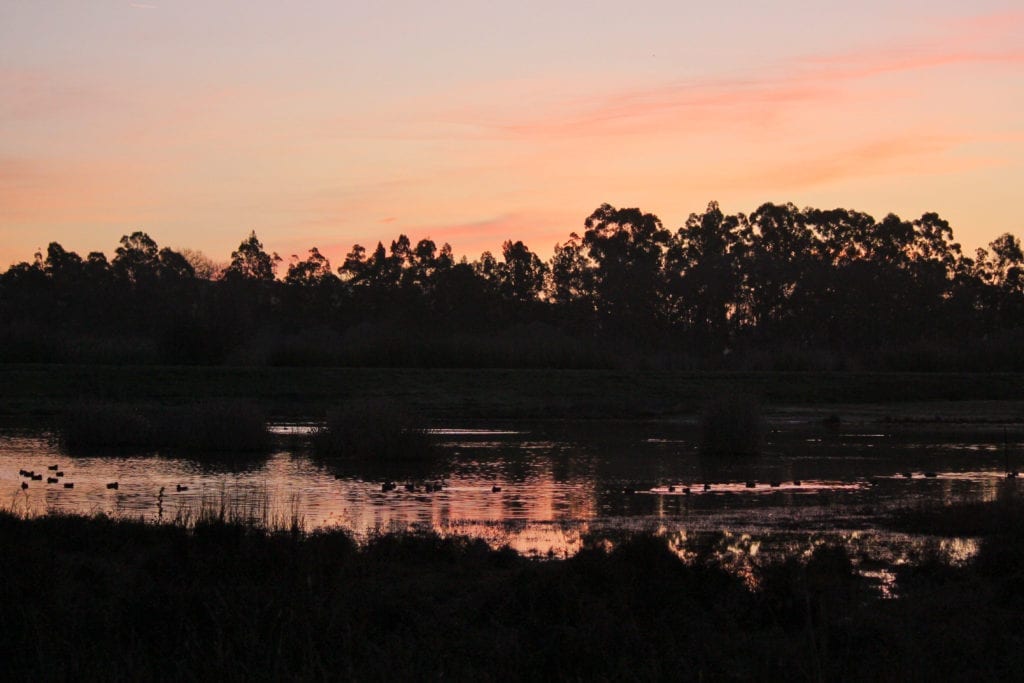
It’s gonna be a good morning!
Even in the near-dark, a large group of noisy Green-winged Teals gave their whistle calls in the first ephemeral pond. Don’t the whistles sound like reed instruments?
As the sun emerged, we came upon this male Anna’s Hummingbird in the coyote brush, perhaps prepping to perform some displays.
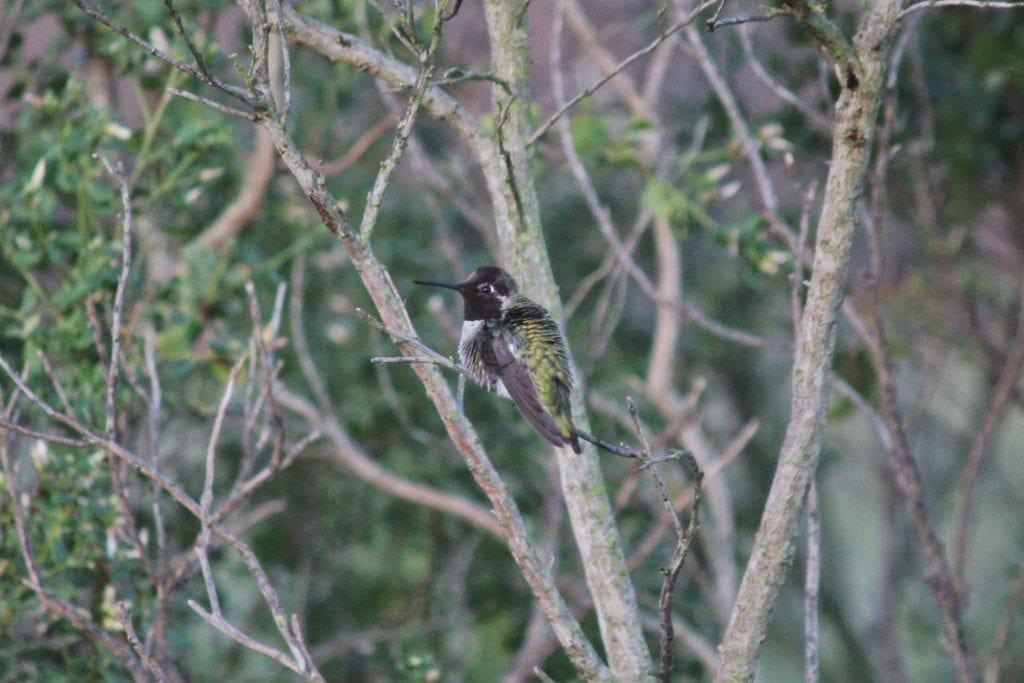
Anna’s Hummingbird
There must’ve been a Black-crowned Night-Heron convention going on at Ellis Creek – the team tallied a record high 39!
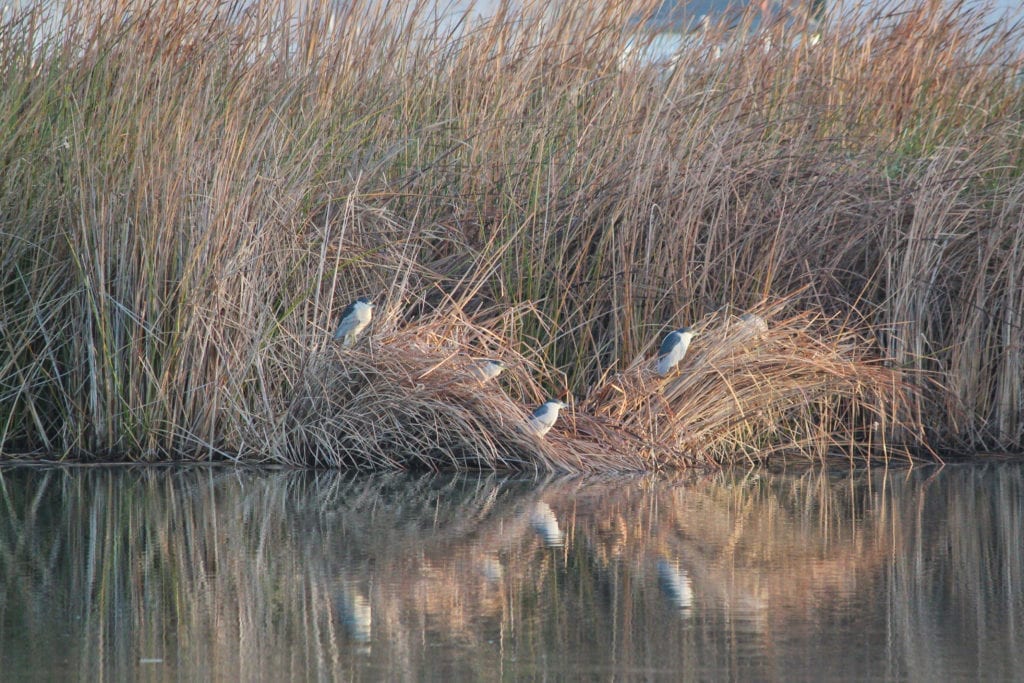
Very important business meeting
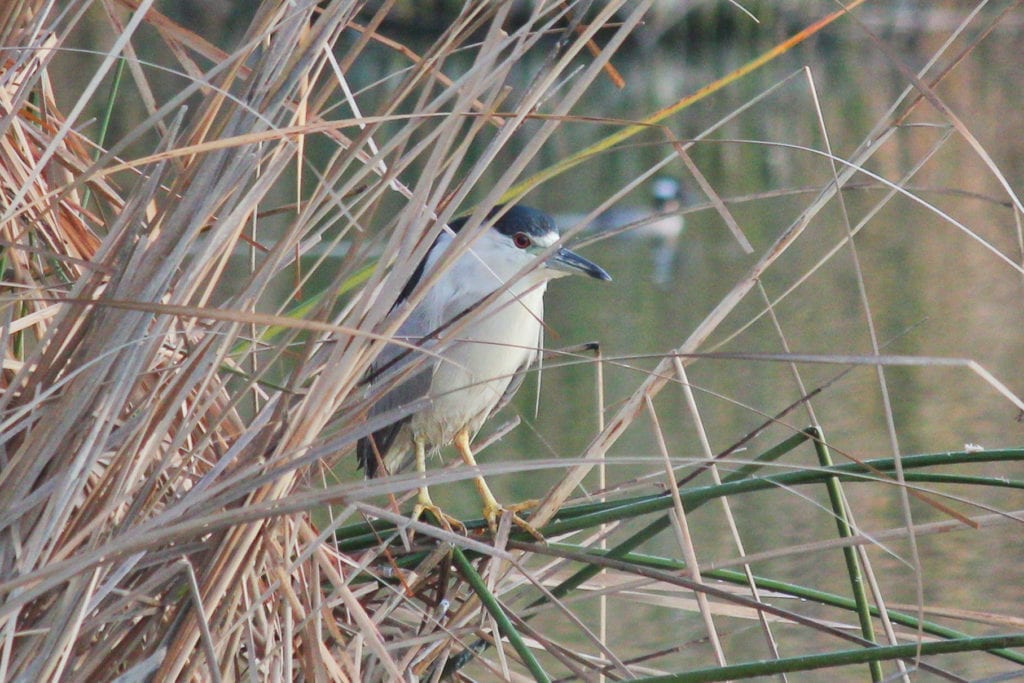
Black-crowned Night-Heron
We listened to this Song Sparrow and delighted in his performance of four totally different songs in a row. Was it a first-year bird practicing his repertoire?
While we’re on the subject of sparrows, we finally recorded the Lincoln’s Sparrow’s high-pitched buzzy call note – listen to it below. This buzzy call contrasts with the more pure-sounding “zeet“-s of many of our other sparrows, and is a great clue that the dainty and dapper Lincoln’s Sparrow is concealed nearby. Here’s a refresher on how to tell the Lincoln’s apart from the Song Sparrow.
In one of the ponds, we encountered some solo diving ducks.
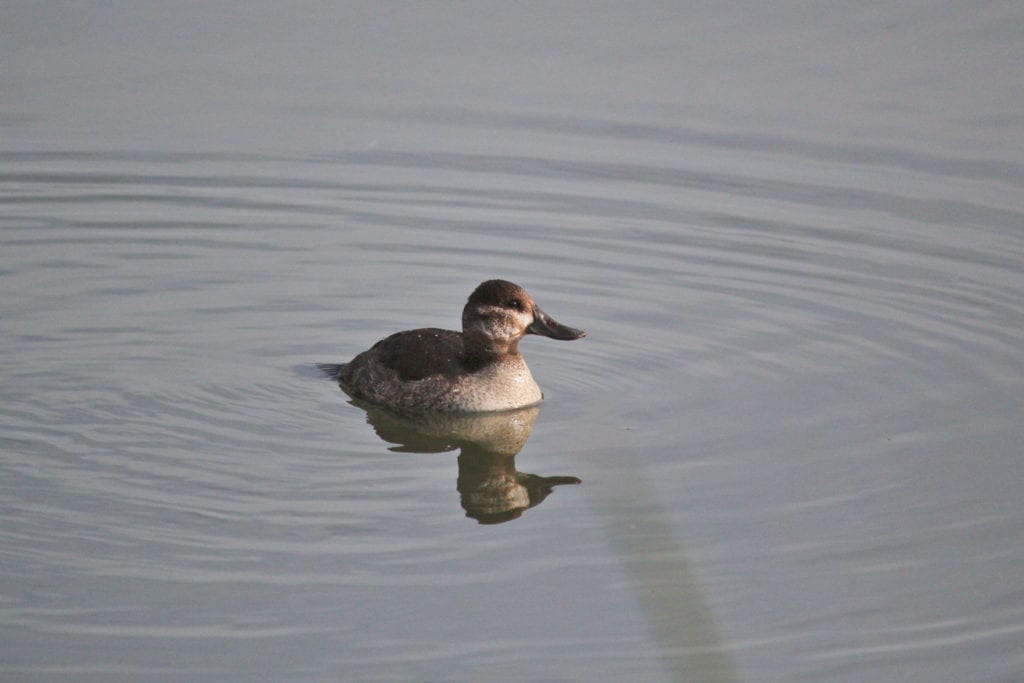
Ruddy Duck
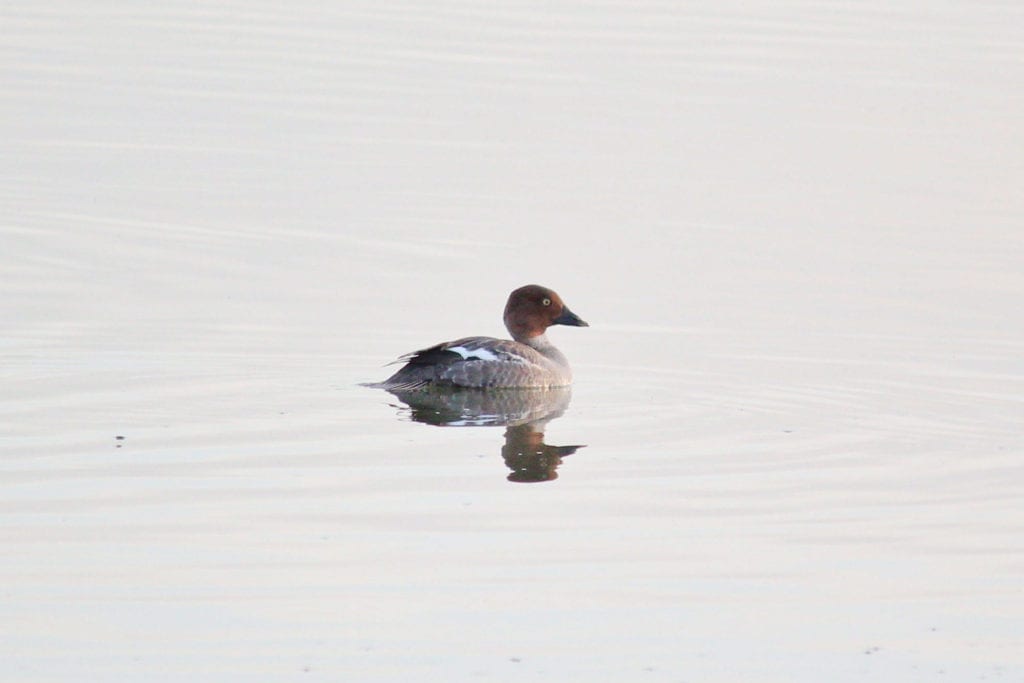
Common Goldeneye
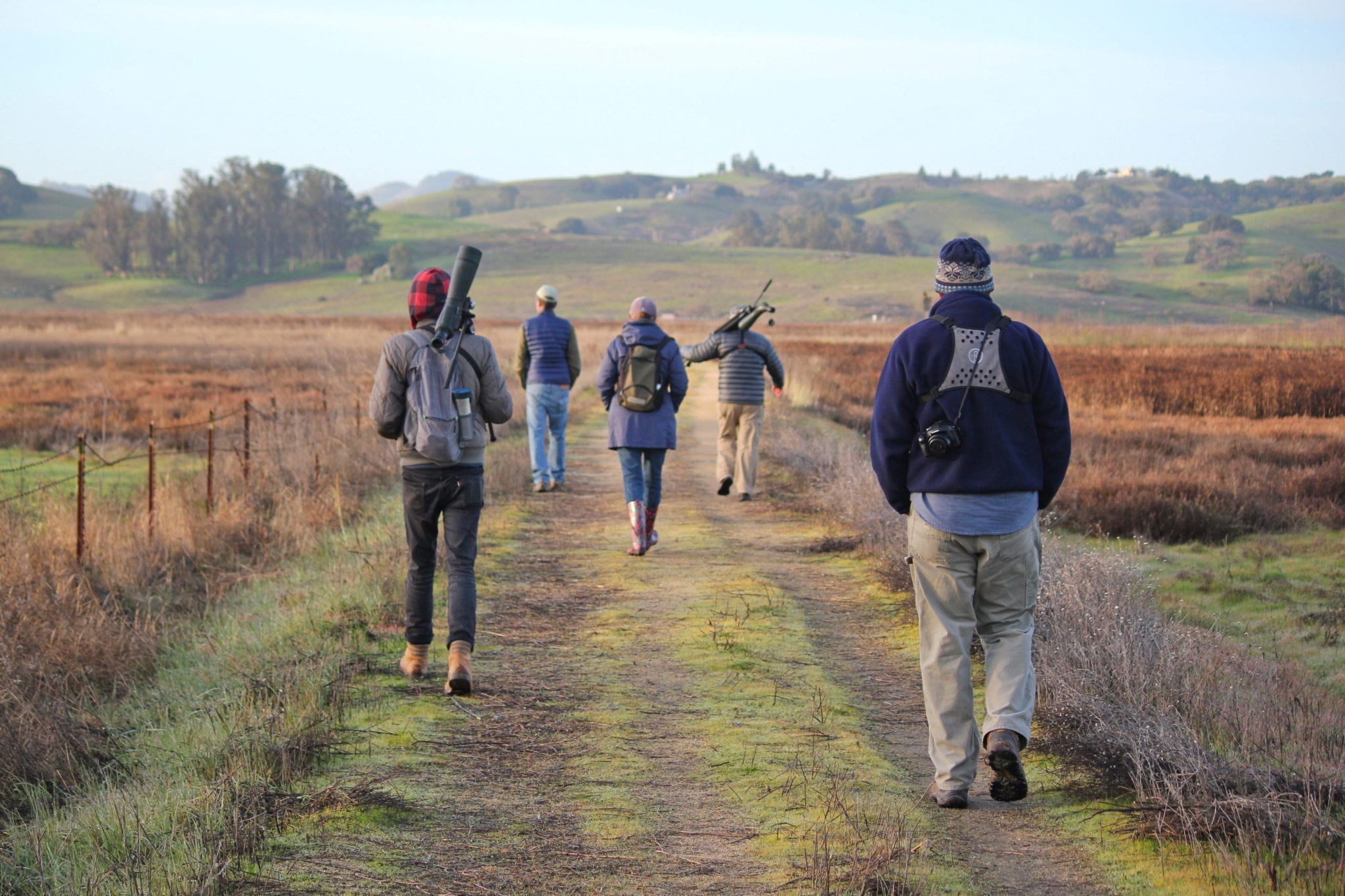
The team split into two groups to cover different sections, and ours headed down a side trail to scope the distant tidal marsh.
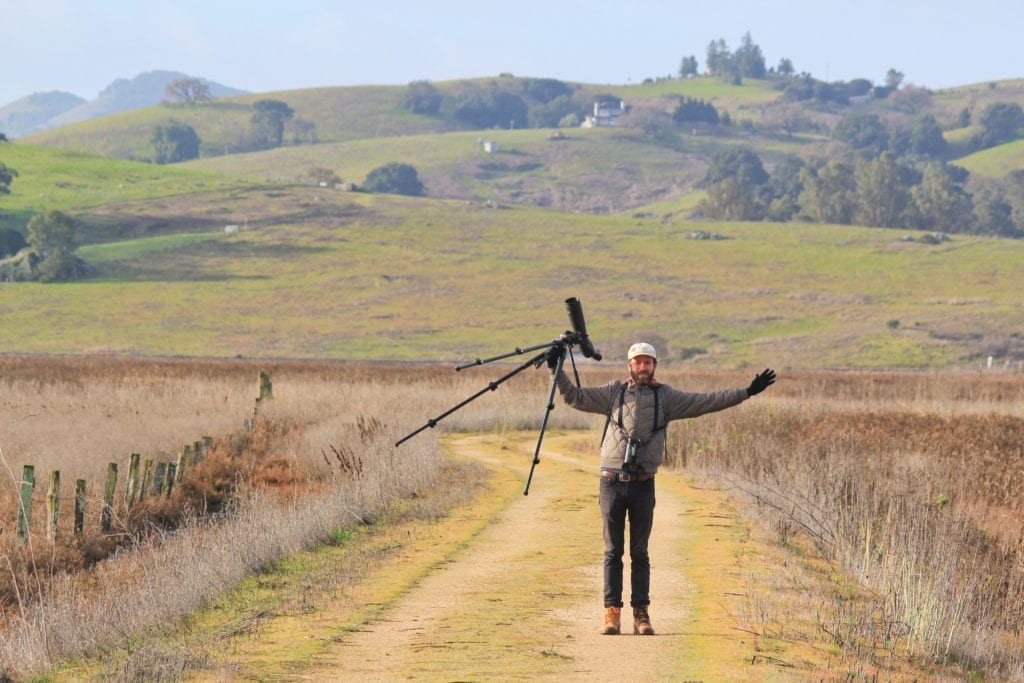
Spotting scope calisthenics
We met a couple Turkey Vultures at the bend, and they took to flight – none too happy that we walked by. Sorry, friends!
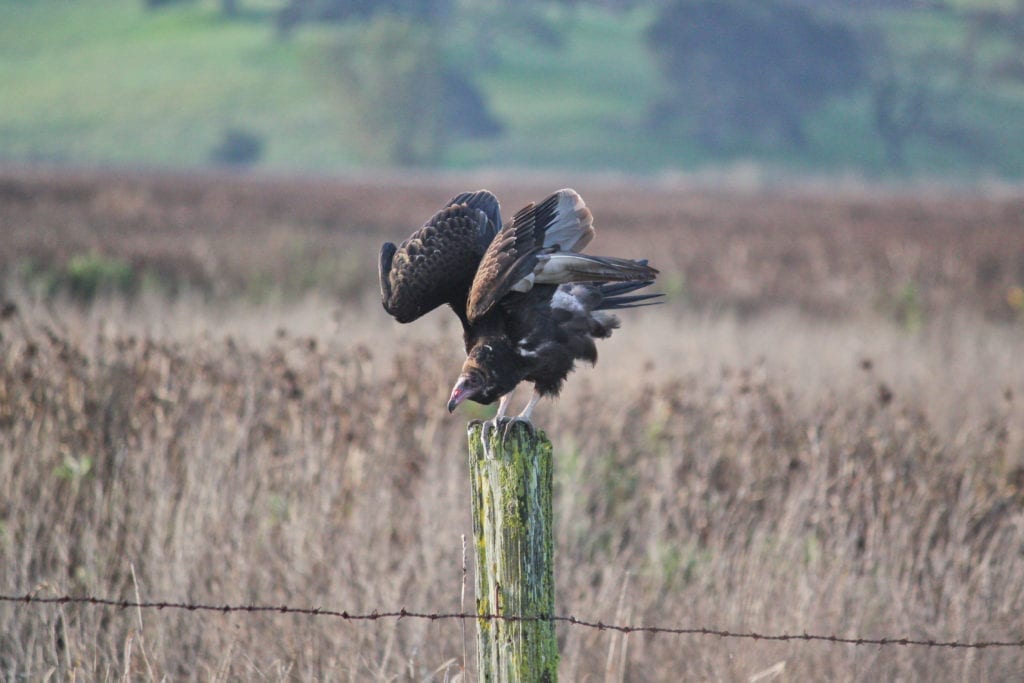
Turkey Vulture
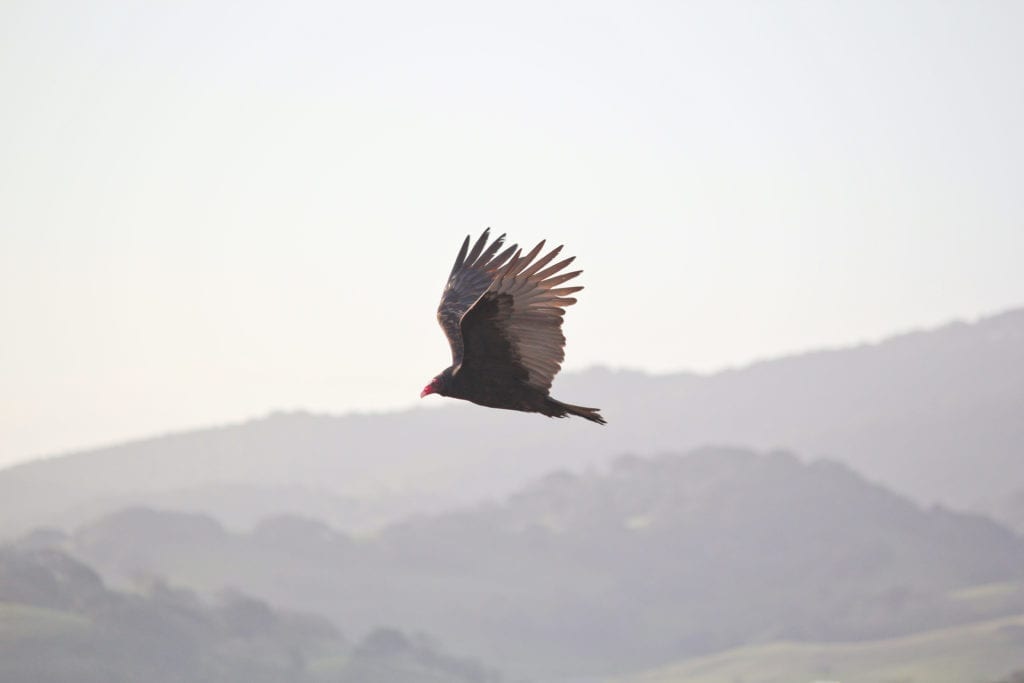
I’m outta here!
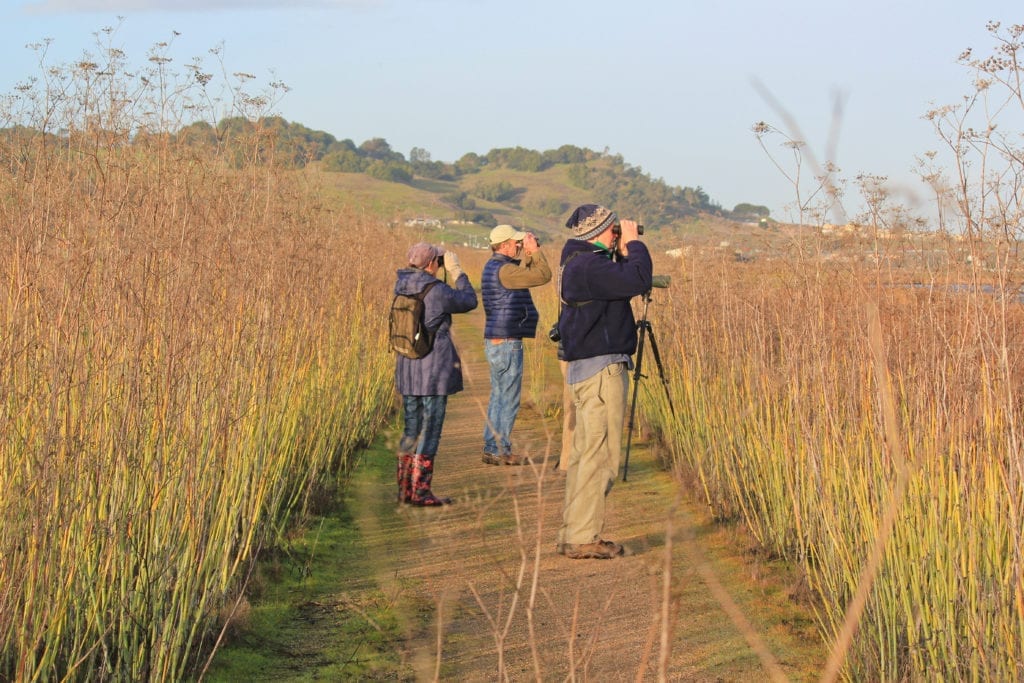
You must be “this tall” to bird here 👉
The exciting sight of 40+ Canvasbacks awaited us when we rejoined the other half of the group.
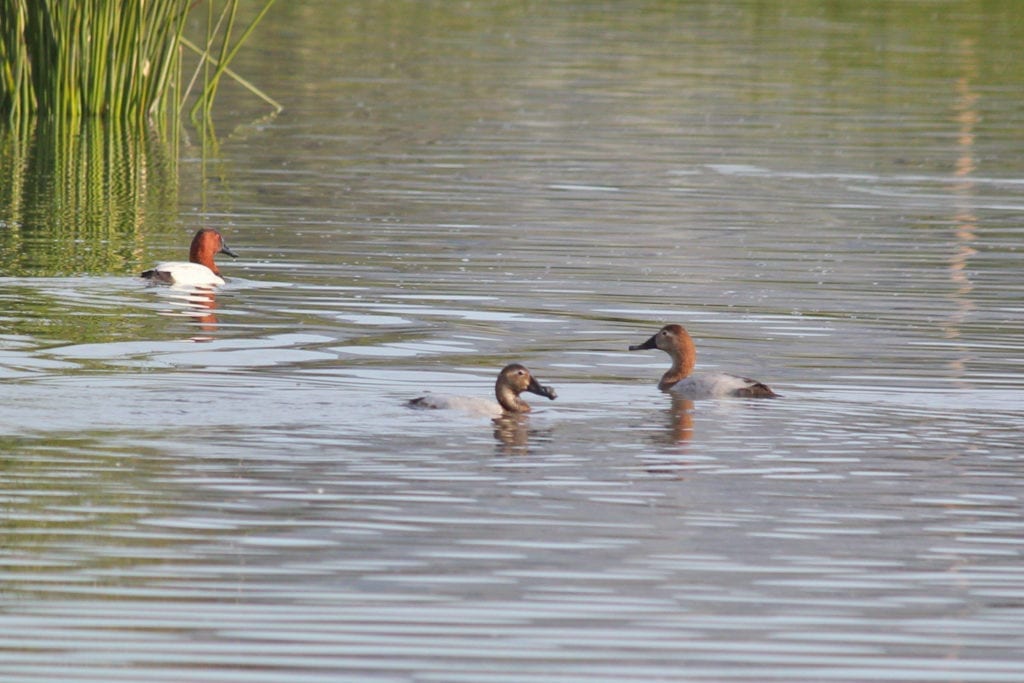
Canvasbacks
We all watched with great interest as this Red-shouldered Hawk alighted to a perch with lunch in tow. As for the unfortunate victim, its foot had long toes and looked rail-esque – our best guess was an American Coot! Click the photo below for a closer view.
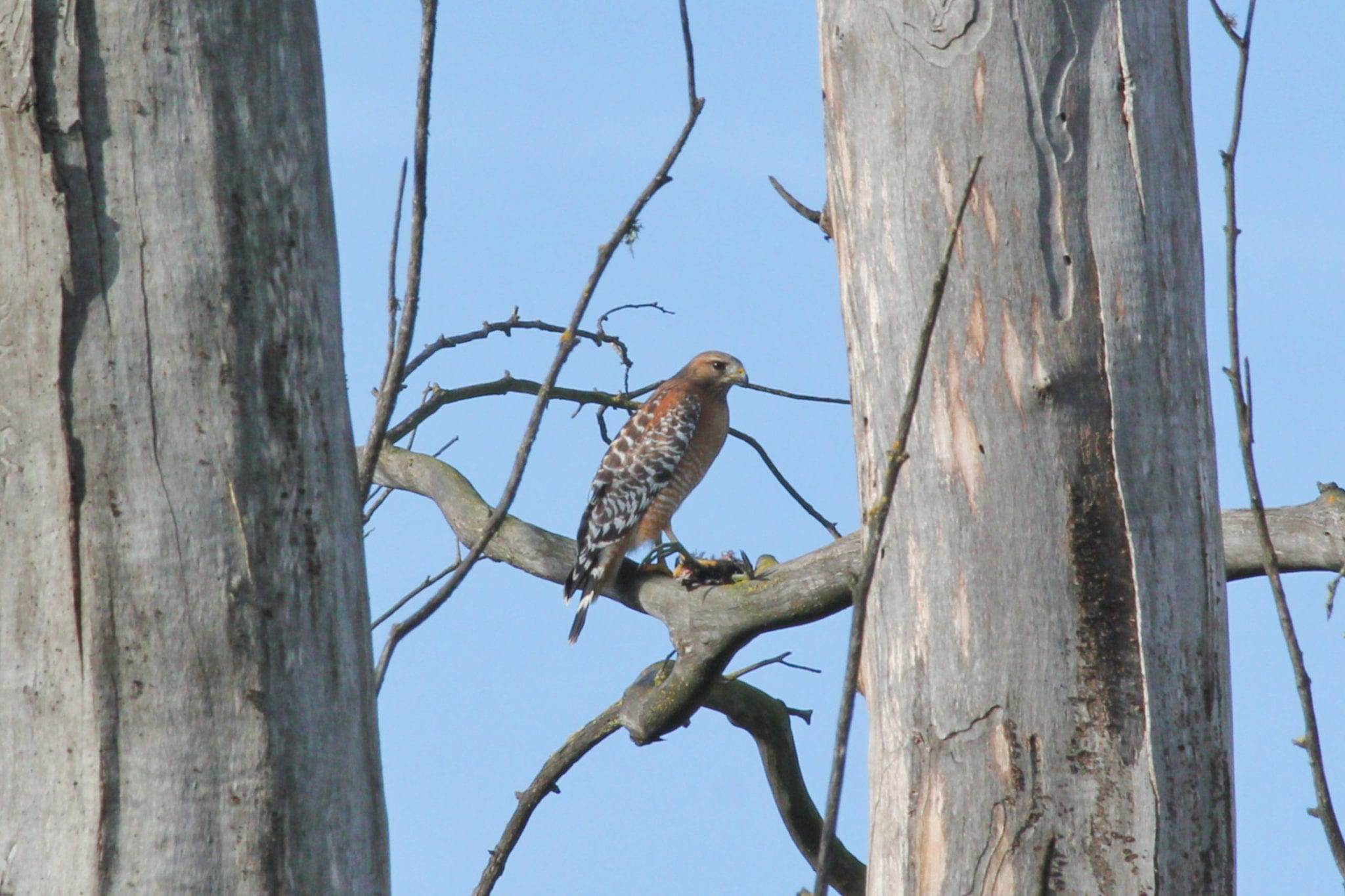
Red-shouldered Hawk
In the world of bird calls, sometimes a bird’s alarm call is identical to its relaxed contact call, just given with more emphasis. It’s fun to notice this in the wild.
Listen below to a flock of Bushtits – you can hear their typical “tsit” calls (the dominant sound in the first 6 seconds – they sound like tiny tambourines to us) and the normal, high-pitched “tee-tee-tee” calls at 0:06 and 0:08 seconds. But, listen at 0:09 seconds as a Northern Harrier flies by. The calls ramp up greatly in intensity – the urgency is palpable!
Who’s got the biggest butt in the pond? Why, the Mute Swan, of course!
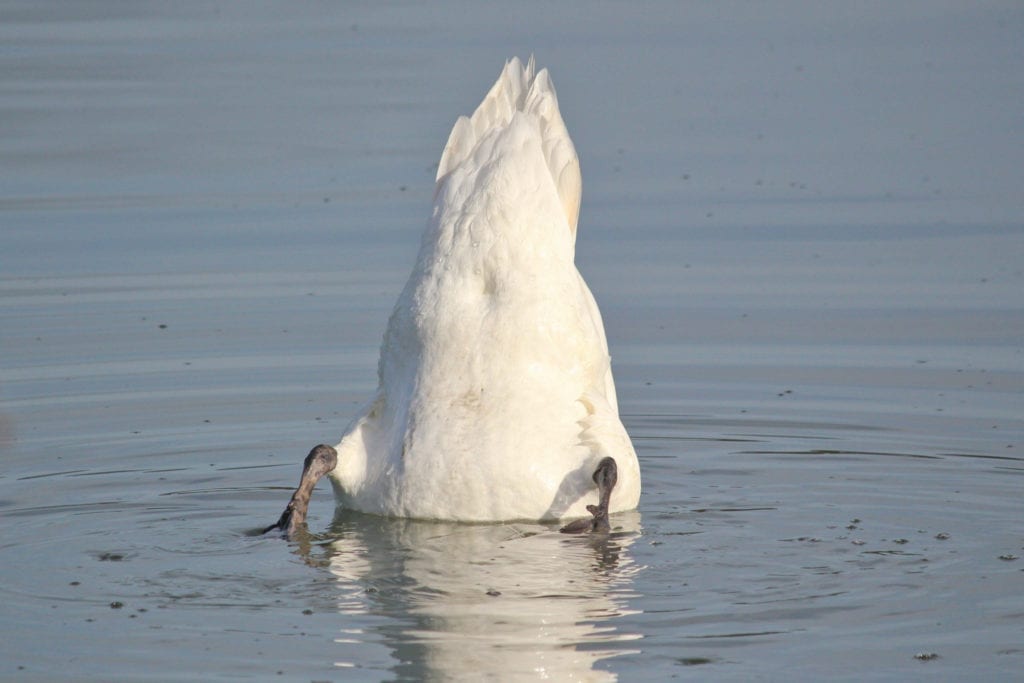
Mute Swan
As we rounded back to the parking lot, this Greater Yellowlegs ran around foraging frenetically.
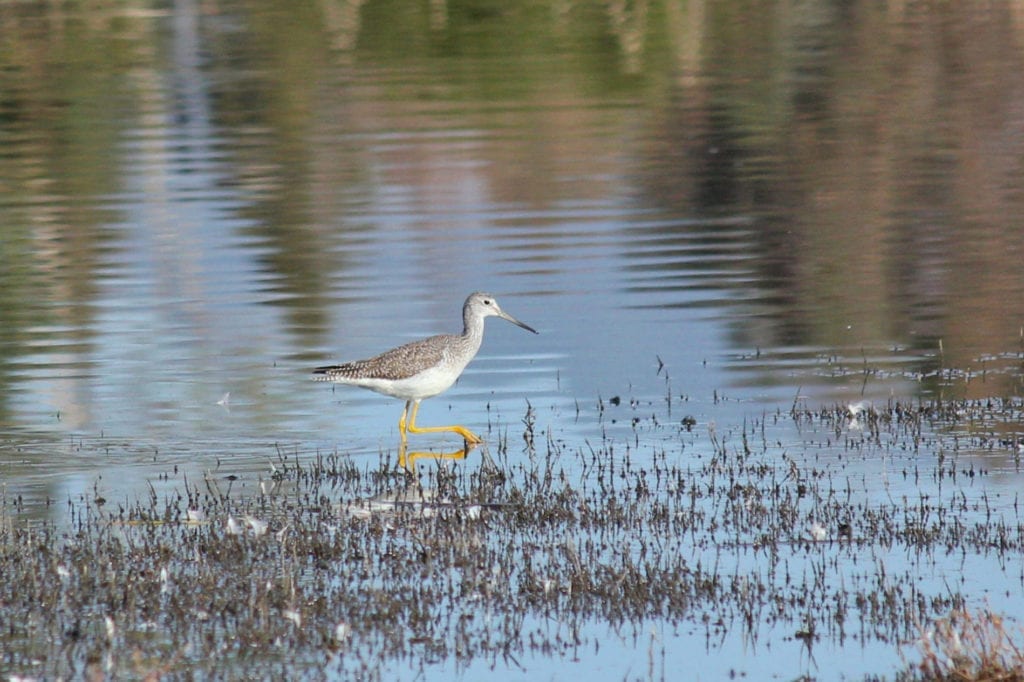
Greater Yellowlegs
All those noisy Green-winged Teals from the morning had tucked away to rest.
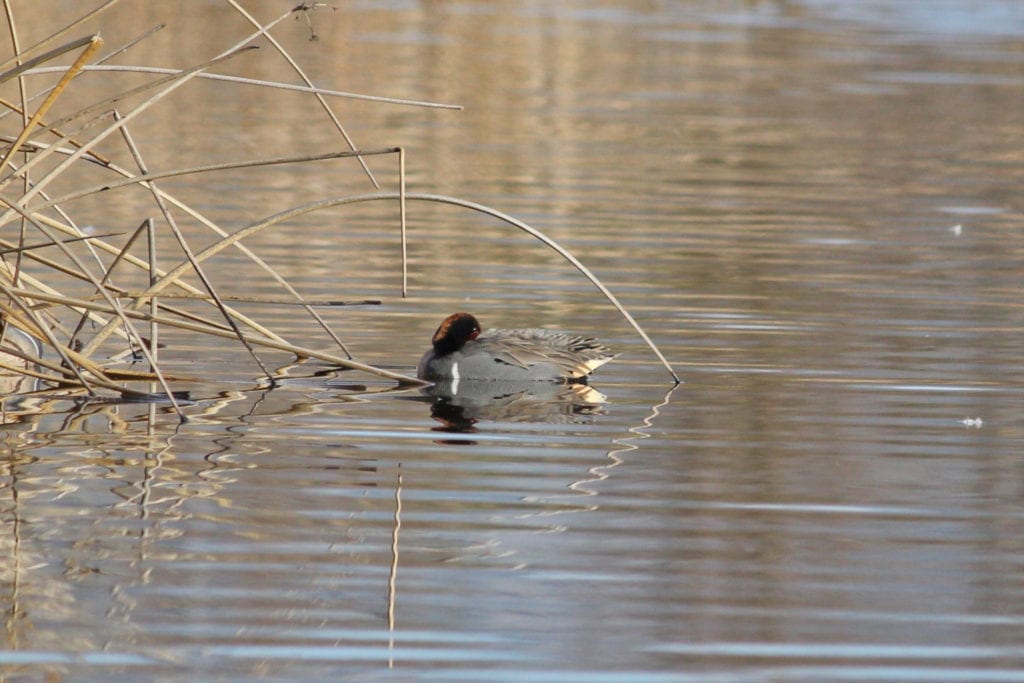
Green-winged Teal
By the end of the morning, the team had tallied 80 species. In the following days, three additional species were located by team members returning to Ellis Creek, bringing the grand total to 83 for PWA’s January 2020 survey.
This has been your in-the-field recap of the PWA’s January bird survey. These monthly bird surveys are just one of the many ways the PWA fulfills its mission statement:
Dedicated to the stewardship, restoration, and expansion of wetlands and associated wildlife habitats.
We’re Miles and Teresa Tuffli of I’m Birding Right Now. We are PWA members and bird survey volunteers. Check back for future reports!
If you have any questions about this particular count or if you’re interested in participating in future counts, please contact the coordinator/compiler for these surveys, Len Nelson, at lennelsn@comcast.net.

0 Comments