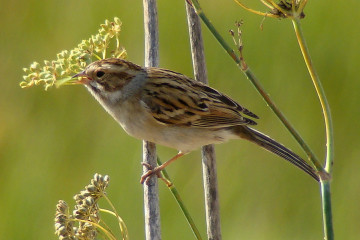
Clay colored Sparrow
Spizella pallida. Vagrant along the south dike September, 2011. A prairie state breeder.
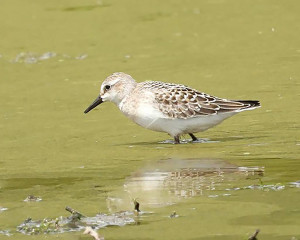
Semipalmated Sandpiper
Calidris pusilla. This sandpiper is found in large flocks East of the Rockies but only as an occasional stray in our wetlands. This grayish brown bird looks very similar to our common Western Sandpiper and Least Sandpiper but has a shorter, straighter bill. Sandpipers forage for tiny invertebrates in very shallow water. Photo by Camila.

Lesser Goldfinch
Spinus psaltria. The nonbreeding male has black back that turns greenish during breeding season. Adults feed on dandelions and feed young softened seed. Favorite of caged bird pet owners.
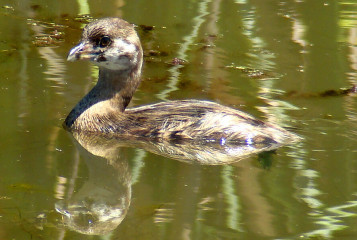
Pied-billed grebe, juvenile
Podilymbus podiceps. "Pied" for two-colored bill during breeding season. "Pied" for two-colored bill during breeding season.

Species Dowitcher
Identifying Long-billed Dowitcher and Short-billed Dowitcher is notoriously difficult. Bill length overlaps between species, body shapes are subtle, and plumage changes by season.
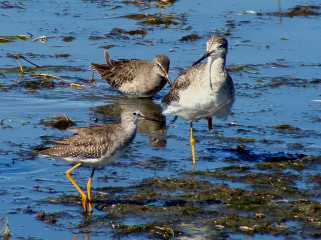
Lesser Yellowlegs, two on left
Tringa flavipes. About half the mass and daintier than Greaters. Unlike the Greater Yellowlegs, its bill is shorter and straighter. Watch for them in late summer.
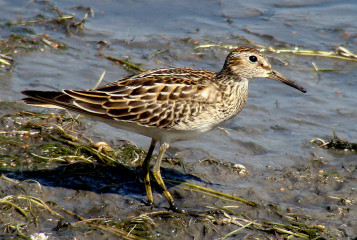
Pectoral Sandpiper
Calidris melanotos. Likes to visit Ellis Creek ponds in September when they are drained. Among the hardiest of shore birds, thousands spend the winter on sand bars as far north as Southeast Alaska where they feed on mollusks, crustaceans, and marine worms.
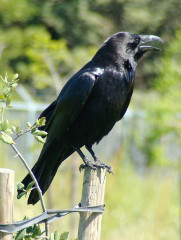
Common Raven
Corvus corax. Cautious and playful. Sounds like a crow with a throat problem. Occurs in mated pairs, and as roving bands of adolescent terrorists; fun to watch.

Pacific Golden Plover
Pluvialis fulva. "Occasionally regular" on Gray's Marsh at the pickleweed-mud interface. Lately wintering near Reclamation Road.

Greater Scaup
Aythya marila. Male and four female shown. Large numbers winter in the Bay Area, diminishing to the south. Often found on the water in large flocks, called "rafts", which can include hundreds of birds. It can dive up to 20 feet in depth, stay submerged for a minute, allowing it to reach food sources such as mollusks, unreachable by other diving ducks!

Red-breasted Merganser
The red-breasted merganser (Mergus serrator) is a duck species that gets its name from males in their winter breeding plumage, as shown. They migrate each year from northern breeding sites on lakes and rivers to their mostly temperate coastal wintering areas along the coast. Photo by Tim Fleming.
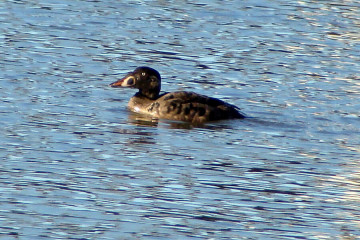
Surf scoter
Melanitta perspicillata. Prefers coastal bays - here only by accident or bad storm.

Common Merganser
Mergus merganser. Male to the right. "River Merg", likeliest in oxidation ponds in winter. Diving duck that eats fish and nests in holes in trees. Bills have serrated edges to help them grip their prey, so they are often known as "sawbills.
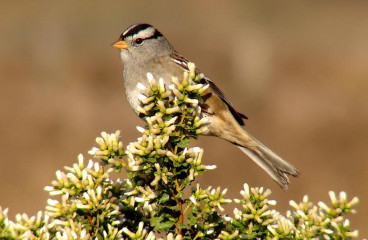
White-crowned Sparrow
Zonotrichia leucophrys. Boldly black and white streaked head with no yellow dot before the eye. A ground scratcher. Western bird only, rarely seen east of the Sierra Nevada.

Sharp-shinned Hawk
Accipiter striatus. Smallest US hawk with long thin legs, short wings, and a very long tail. Can easily be confused with the larger Cooper's hawk. Look for a small head, long, thin toes, heavy breast streaking and a square-ish tail with dark bands to help to support the ID. Photo by Jerry McFarland
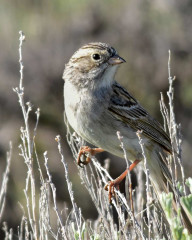
Brewer’s Sparrow
Spizella breweri. Streaky, gray-brown sparrows with conical bills, best identified by their long, trilling songs. Build nests in dense shrubs where they glean insects from the bark and foliage; also seed-eating. USFWS-Public Domain
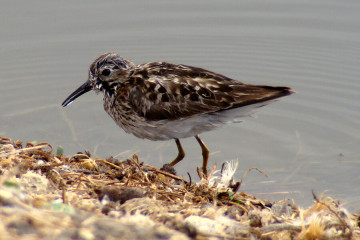
Least Sandpiper
Calidris minutilla. Our most abundant shorebird. The world's smallest sandpiper.
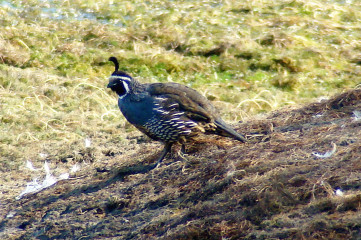
California Quail
Callipepla californica. State bird of California.. Listen for its call: "Chi-ca-go!". These do best with an abundance of cover and shortage of cats.
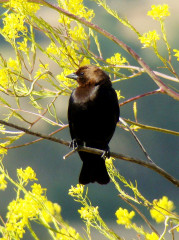
Brown-headed Cowbird
Molothrus ater. Obligate nest parasites, sneaking around riparian areas in spring. Listen for water gurgling call of male in spring.
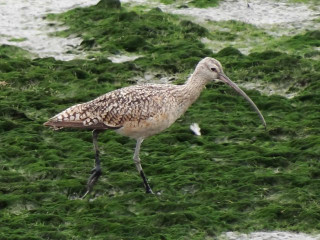
Whimbrel
Numenius phaeopus. These pass though our wetlands in spring from the bay, on through the Bodega Gap. Sometimes migrate with curlews.

Clark's grebe
Aechmophorus clarkii. Sometimes found on the Petaluma River, its less common here that the Western Grebe. Its bill is yellow and its eye is in the white area of its face.

Blue-winged Teal pair
Anas discors. Long distance migrants. Seem to have changed range and are no longer reliable wintering birds here. Both sexes have sky-blue wing coverts (feathers over feathers to help flight), a green speculum (patch nears posterior of wing), and yellow legs. A dabbling duck.

Baird's Sandpiper
Calidris bairdii. A midcontinental migrant occurring in late summer. Occurs on both coasts. Suspected they cover over 4,000 miles nonstop in migration.

Red-necked Phalarope
Phalaropus lobatus. A smaller wader with lobed toes. Our likeliest phalarope, arriving in late summer. Females are larger and more brightly colored than males, who perform all incubation and chick-rearing activities.
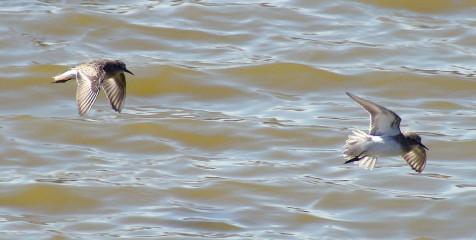
Western Sandpiper
Calidris mauri. Small shorebird that feeds in deeper water than Least Sandpipers.
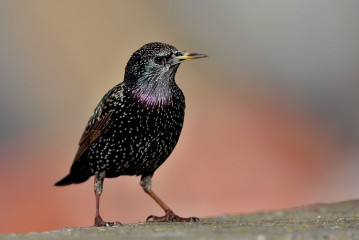
European Starling
Sturnus vulgaris. Starlings are chunky and blackbird-sized, but with short tails and long, slender beaks. In flight their wings are short and pointed, making them look rather like small, four-pointed stars (and giving them their name). Great tornado like flocks dubbed "murmurations" occur in the fall. Over 50,000 were counted here in 2015-2016. Photo by Andrej Chudy
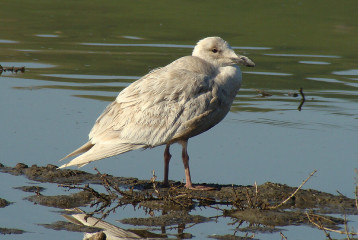
Glaucous-winged Gull
Larus hyperboreus. Rather variable in size. Usually in Canada, quite rare in our area, . No black in wing tips. Scavenger and predatory.
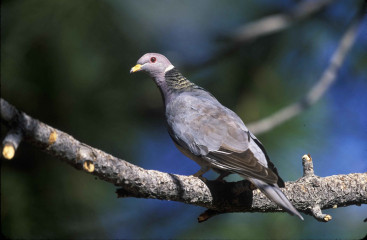
Band-tailed Pigeon
Patagioenas fasciata. Largest North American pigeon with blue-gray plumage and a darker band at the base of its tail. Beak and feet are yellow. Has a white stripe on the back of its neck and a green iridescent patch below that. Builds its twig nest in trees. Often seen in large flocks, ranging from dozens to hundreds, seeking seeds, berries, and fruit. Photo by PublicDomainImages

California Gull
Larus californicus. Longish low posture, pointy wings. State bird of Utah. Expanding colony in the south bay makes this one of our 3 year round gulls.

Wild Turkey
Meleagris gallopavo. Not seen often in wetlands, but numerous in Sonoma County. Look for them across the river on the hillside ranches.

Eurasian Collared Dove
Streptopelia decaocto. Our latest alien invaders. It has a black half-collar edged with white on its nape from which it gets its name. Mournful cries.
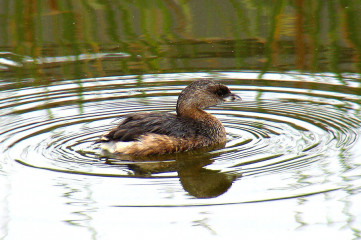
Pied-billed grebe
Podilymbus podiceps. "Pied" for two-colored bill during breeding season. "Pied" for two-colored bill during breeding season.

Brant
Branta bernicla. Really a darkish coastal goose here only by accident. A pair with somewhat worn plumage occuring in June, 2008. Grazer of Eel grass, Zosstera.

American Pipit
Anthus rubescens. Small songbird common in winter, easily overlooked due to "anybird" plumage. Terrestrial, closely allied to wagtails. Runs on the ground.

Sharp-tailed Sandpiper
Calidris acuminata. Old World sister species to Pectoral Sandpiper. Fall vagrants occur, mostly first year birds. Breeds eastern Siberia.
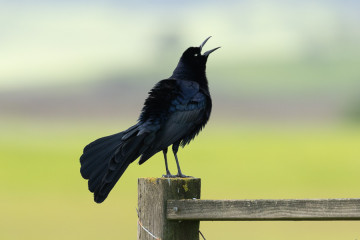
Great-tailed Grackle
Quiscalus mexicanus. Males black with yellow eyes, very long tail and iridescent purple on back and breast. Omnivorous and opportunistic feeder. Although they look like crows, they are not related. Photo by Tim Fleming.

Red-shouldered Hawk
Buteo lineatus. Watch for banded tail. Smaller than Red-tailed Hawk. Hear a loud scream? Look overhead or in the high branches of a eucalyptus. Often nests April-June in eucalyptus tree at Ellis Creek. Photo by Tim Fleming.

Northern Shrike
Lanius borealis. Nicknamed butcherbird, the Northern Shrike is a keen hunter known for impaling its prey on thorns or spikes. The Northern Shrike is a gray, white and black perching bird with a black mask. It inhabits the boreal forest at its northernmost edge. A few may wander South in the winter. Photo by Karim Bouzidi.
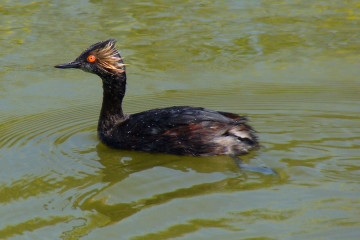
Eared grebe
Podiceps nigricollis. Our smallest grebe, has a penchant for brackish water.
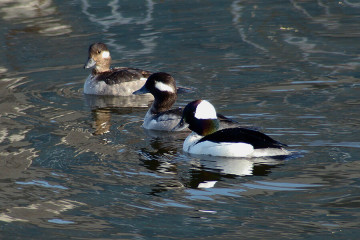
Bufflehead male, female, juvenile
Bucephala albeola. A diving duck--now you see it now you don't. Our smallest waterfowl. A 10 on the cuteness scale.

Scaly-breasted Munia
Lonchura punctulata. Tiny songbirds with oversized bills, have brown upperparts (dark brown head) and white underparts with dark scale markings. Sometimes nest and forage in colonies. Climb grass stems to eat seed; also eat berries and small insects. Photo by Anindhya Sundar Das
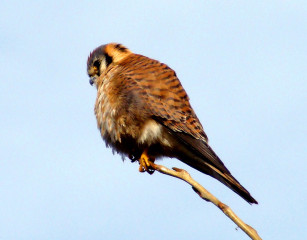
American Kestrel, female
Falco sparverius. Formerly known as Sparrow Hawk due to its small size. Male has blue-gray wings, female's are brown, our most beautiful hawk.
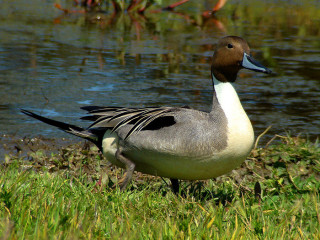
Northern Pintail male
Anas acuta. A dabbling duck that is elegant, graceful, and thankfully common. This is a large duck, and the male's long central tail feathers give rise to the species' English and scientific names. The hen's plumage is more subtle and subdued, with drab brown feathers. Both sexes have blue-grey bills and grey legs and feet.
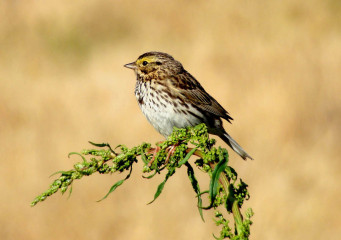
Savannah Sparrow
Passerculus sandwichensis. Mostly a wintering species, one race breeds at pickleweed/uplands interface. Typically sparrow-like dark-streaked brown back, and whitish underparts.
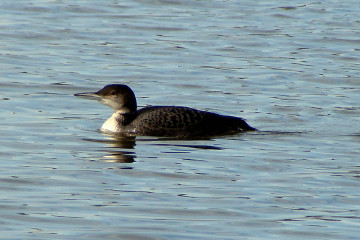
Common-Loon
Gravia immer. Expert divers up to 200 ft. below with eyes that can focus in air and under water, heavier bones, and leg muscles that hold extra oxygen.Grey or black bill held horizontally.

Spotted Sandpiper
Actitis macularius. Pretty scarce now, mostly in late spring migration. These are not gregarious birds and are seldom seen in flocks.

Green-winged Teal
Anas carolinensis. The Green-winged teal is the smallest dabbling duck in North America, measuring 12 to 15 inches long. Males have a chestnut head with a glossy green patch, a gray body, and a white vertical shoulder stripe. Females are mottled brown. Both feature a brilliant green wing patch. Photo by Tim Fleming.
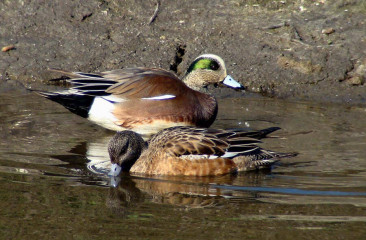
American Wigeon
Anas americana. Formerly known as Baldpate for white forehead. Dabblers, divers and grazers all rolled into one duck.
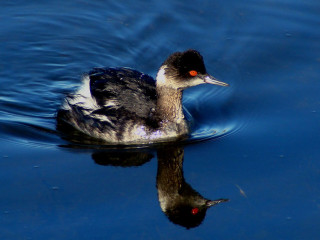
Eared grebe, winter plumage
Podiceps nigricollis. Our smallest grebe, has a penchant for brackish water.
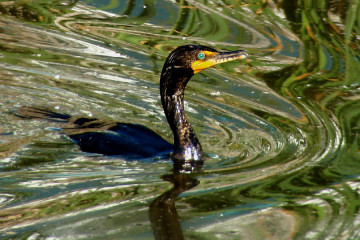
Double-crested Cormorant
Phalacrocorax auritus. Dives for fish, so must have deep water, nests by Lakeville Holding Ponds. Nests in oxidation pond eucalyptus.
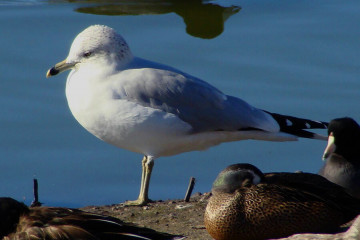
Ring-billed Gull
Larus delawarensis. Has broad black ring on bill - a medium-sized gull. Silver gray back and greenish yellow feet. Winter visitor.
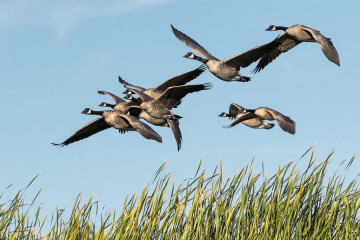
Canada Goose
The Canada goose (Branta canadensis) is a large species of goose with a black head and neck, white cheeks, white under its chin, and a brown body. Weighing up to 20 pounds with a massive 5.5-foot wingspan, they are famous for their signature V-shaped migratory formations. Photo by Tim Fleming.
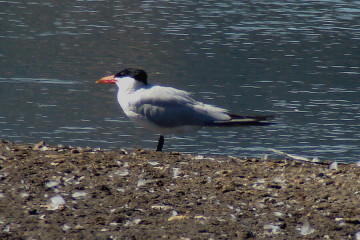
Caspian Tern
Hydroprogne caspia. North America's largest tern. Bright red bill and black cap make it a standout. The one time mascot of PRBO.
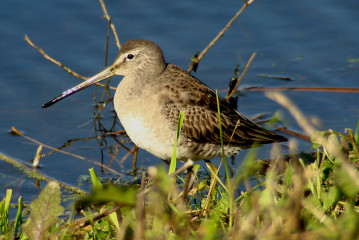
Long-billed Dowitcher
Limnodromus scolopaceus. The common wintering dowitcher. Favors fresh water habitat whereas the short-billed dowitcher prefers salt water. Migrations occcur September to October.
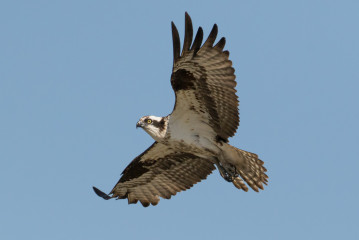
Osprey
Pandion haliaetus. Large predator with wide wing span. The osprey dives, feet-first, to catch a fish, then adjusts the fish head first. Populations increasing, similar to the eagles. Decline in 1960's was due to early pesticides that are now banned. Photo by Tim Fleming
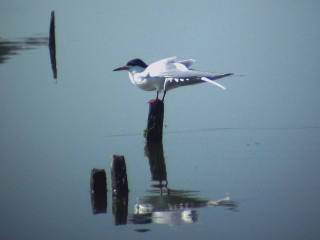
Forster's Tern
Sterna forsteri. Feeds by plunge-diving for fish. Unlikely to be confused with the common tern in winter because of the black eye mask. It nests in a ground scrape and lays two or more eggs. Like all white terns, it is fiercely defensive of its nest and young.

Mourning Dove
Zenaida macroura. Now being bullied by larger Eurasian Collared-Dove. Low, mournful coo. Common in rural and suburban areas.
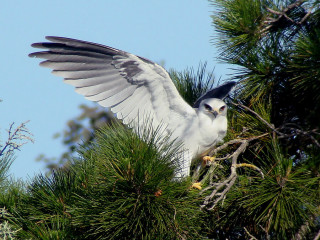
White-tailed Kite
Elanus leucurus. Stunning predators, named for their hovering in the air above prey. In spring may nest in pines between Point Blue and Ellis Creek. Once rare and endangered because of DDT, the kite has made a dramatic comeback, now a very common resident of our wetlands.
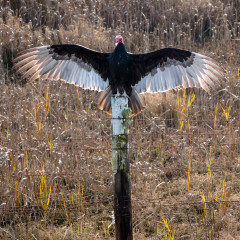
Turkey Vulture
The Turkey vulture (Cathartes aura) is a large scavenger bird with dark brown feathers, a bald red head, a 6-foot wingspan, and a unique sense of smell used to find dead animals. Sometimes they're seen sitting with their wings held open early in the morning like this, referred to as the horaltic pose, to thermoregulate their body temperature with the sun’s rays, essentially warming themselves up as turkey vultures are known to lower their body temperatures at night by as much as 11 degrees Fahrenheit. They soar in a tilted "V" shape. Photo by Tim Fleming.
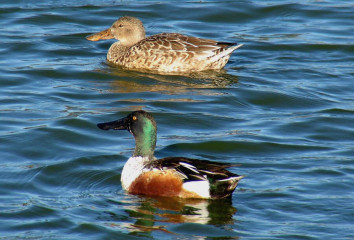
Northern Shoveler
Anas clypeata. Sifting food from water like baleen whales with rakers lining their bills, often feeding in circling teams in the central pond, each taking what the one in front kicks up.

House Finch
Haemorhous mexicanus. Males have small amount of bright red on crown, breast, and rump. Widespread and common and can be an agricultural pest. Omnivorous, feeds mainly on insects and seeds.
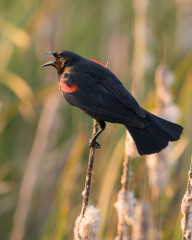
Red-winged Blackbird
(Agelaius phoeniceus) The red-winged blackbird is sexually dimorphic; the male is all black with a red shoulder and yellow wing bar, while the female is a nondescript dark brown. Seeds and insects make up the bulk of the red-winged blackbird's diet. Photo by Tim Fleming.

American Herring Gull
The American Herring Gull (Larus smithsonianus) is a large North American water bird. Adults feature a white head and body, a light gray back, black wingtips with white spots, pink legs, and a yellow bill with a red spot. They live near coasts, lakes, and landfills. Photo by Ray Bllcliff
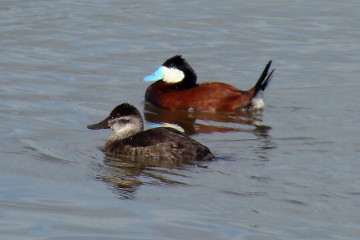
Ruddy Duck, male above
Oxyura jamaicensis. In winter the male's plumage is drab, but in spring, his breeding plumage is a rich copper color, and he sports a blue bill. This diving duck often holds its tail upright ending in a sharp point. Male slaps his bill forcefully on water surface to attract female.

Western/Least/Dunlin Sandpiper
It is difficult to distinguish between these three species. Dunlins (which are themselves a specific type of sandpiper) and other sandpiper species can be very hard to identify because they undergo major seasonal plumage changes and often gather in large, mixed-species flocks.

Greater Yellowlegs
Tringa melanoleuca. Common shorebird that calls "drew, drew, dew" near shore of Shollenberger pond. Grayish bird with 14" long yellow legs and long bill that torques upward at its end. Both yellowlegs occur together in groups.

Mallard
Anas platyrhynchos. Wild and domestic Mallards both occur in the wetlands. The residents start nesting in February. The male birds (drakes) have a glossy green head and are grey on wings and belly, while the females (hens or ducks) have mainly brown-speckled plumage. The mallard is omnivorous and very flexible in its foods choice. Feeds by dabbling for plant food or grazing.

Western Gull
Larus occidentalis. Large gulls of Pacific all have common ancestor, but evolved separately in isolation and can still hybridize. White body with slate colored back and wings.

Fox Sparrow
Passerella iliaca. Watch for a dark sparrow, hopping and scratching in the underbrush to uncover food.
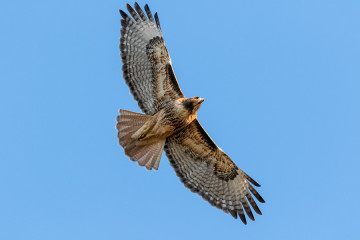
Red-tailed Hawk
Buteo jamaicensis. The most widespread and familiar large hawk in North America. Bulky and broad-winged, it's designed for effortless soaring. In flight, look for the dark bands on leading edge of the inner wings. Photo by Tim Fleming.
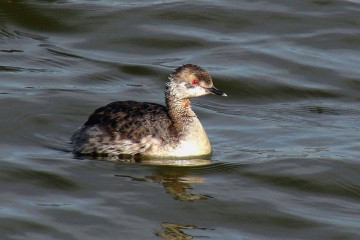
Horned grebe
Podiceps auritus. Like other grebes, it swallows large numbers of it own feathers, which lodge in the stomach and prevent fish bones from passing into the intestines.
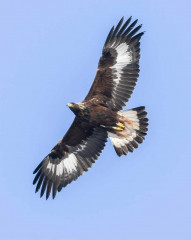
Golden Eagle
Aguila chrysaetos. One of North America's two eagle species, the Golden Eagle lives year-round in the hills of Sonoma County but doesn't often visit our wetlands. It is larger than a turkey vulture with a much steadier flight. The adult is dark brown and in the right light you may see a golden wash along its head and neck. The juvenile has white wing patches and a distinctive white tail with a broad black band. Photo by Trisha Snyder.
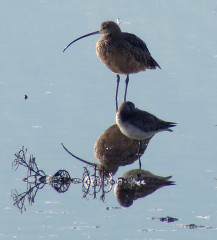
Long-billed Curlew, behind
Numenius americanus. Largest American shorebird with long sickle shaped bill. Sociable birds found in groups when feeding, roosting, and migrating. A species of concern since it was hunted as a delicacy, but is now protected.
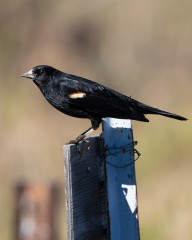
Tri-colored Blackbird
(Agelaius tricolor) The Tricolored Blackbird is just as handsome as the Red-winged Blackbird, but much rarer. Noisy males flaunt their red shoulders, much like their more common cousin, but they have a white line below the shoulder. Tricolored Blackbirds are declining due to extensive wetland loss and agricultural practices in the farm fields where they now nest. Photo by Tim Fleming

Horned Lark
Eremophila alpestris. Formerly regular in Shollenberger Park in winter. Walks instead of hopping. Philopatric - returns to birthplace after migrating. 15 distinct subspecies.
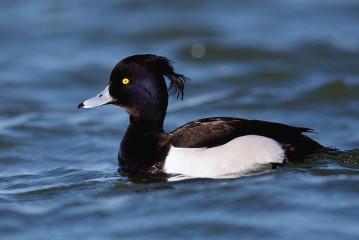
Tufted Duck
Tufted duck (Aythya fuligula). The tufted duck breeds throughout temperate and northern Eurasia. It occasionally can be found as a winter visitor along both coasts of the United States and Canada. These ducks are migratory in most of their range, and overwinter in the milder south and west of Europe, southern Asia and all year in most of the United Kingdom. Photo by Andrej Chudy
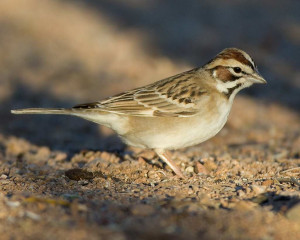
Lark Sparrow
Chondestes grammacus. This distinctive sparrow has bright chestnut-brown color on its cheeks and on its crown, with white and black stripes on the face. Typical of other sparrows it has a brown streaked back and white underparts but is notable for a black spot in the middle of its chest. Its shape is longer and larger than many sparrows. It is not abundant in Sonoma County. Photo by Andrej Chudy
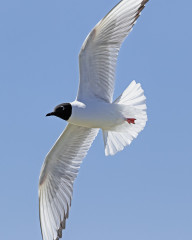
Bonaparte's Gull
Chroiocephalus philadelphia. Lovely and tern like. In breeding plumage, it has a slaty black hood, which it loses in non-breeding plumage. One of the smallest gulls to be found in North America. It nests in trees, not on the ground. Photo by Tim Fleming.
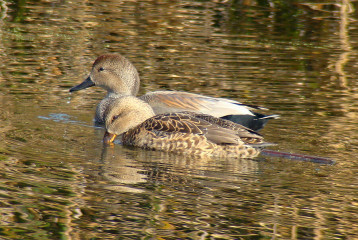
Gadwall
Anas strepera. A dabbling duck. Gadwalls are one of the most hunted duck species (3rd to the mallard and green-winged teal), with 1.7 million shot each year. Because of the efforts of Ducks Unlimited and other private conservation groups, the species continues to be sustainably hunted.
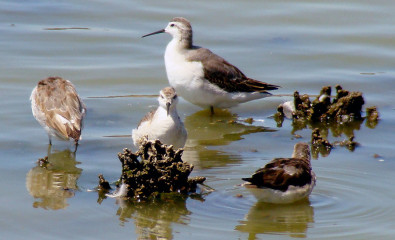
Wilson's Phalarope
Phalaropus tricolor. Needle-beaked dirvishes (whirling dancer) of the central pond in high summer. Gender reversal; the males are more dully marked in breeding plumage and hatch the eggs.

Bald Eagle
Haliaeetus leucocephalus. Primarily a fish eater, will also eat carrion and injured waterfowl. A very welcome recent return to our area. Photo by Tim Fleming
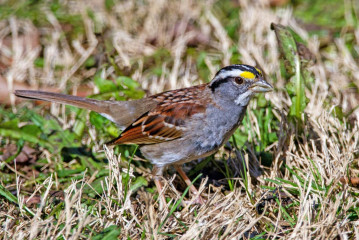
White-throated Sparrow
Zonotrichia albicollis. Medium-sized sparrow with striking coloration. Brown-winged, has a black eye stripe, white crown and eyebrow, and a yellow spot between its eye and upper bill. Its throat is also white, its breast streaked gray, and its belly a light gray. Forages on the ground for seeds, insects, and berries and eats mainly insects during the summer. Nests on the ground or lower in trees. Photo by Joshua J Cotten
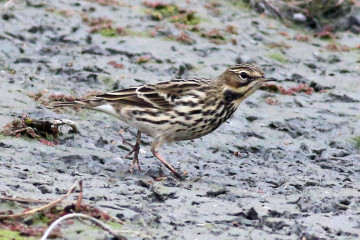
Red-throated Pipit
Anthus cervinus. An Asian fall vagrant. Roger Marlowe photographed one at Ellis Creek finishing ponds during draw down September, 2015. A small passerine (perching songbird). Eats insects.

White-crowned Sparrow
Zonotrichia leucophrys, The White-crowned sparrow is identified by a plain pearly-gray breast and neck, a long dark tail, and two white wing bars on brown, streaked wings. Its head features a striking pattern of bold black and white stripes.They are known to migrate up to 300 miles in one night. Photo by Tim Fleming
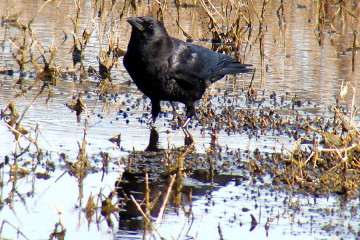
American Crow
Corvus brachyrhynchos. May gang up on red-shouldered hawks. Among the most intelligent of birds.

Northern Harrier male
Circus cyaneus. Fomerly called Marsh Hawk. Common in winter, a few stay to nest. Watch for the harrier flying low to the ground. They hunt by sound as well as sight. Adult male is nicknamed the "Gray Ghost".for its silvery color.
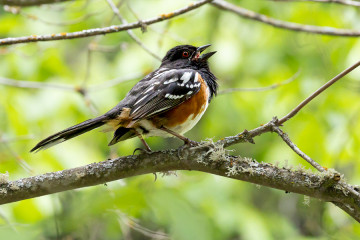
Spotted Towhee
Spotted Towhees love brushy borders, dense thickets, and a healthy, insect-rich ecosystem. They spend most of their time on the ground eating bugs. They have a distinctive red eye and reddish breast. Photo by Tim Fleming.

Iceland Gull
Larus glaucoides. (was Thayer's) Gull) Medium-sized gull. Darker gray than other gulls with blackish wingtips. Forages over water, plucking fish from the surface and eating mid-flight. Also eat mussels, snails, and occasionally garbage. Photo by Sergii
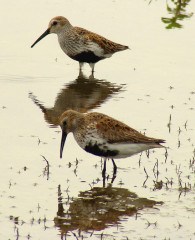
Dunlin
Calidris alpina. Hardy, dumpy northern wintering shorebirds. (adult plumage)

Snow Goose
Chen caerulescens. Infrequent winter visitor, usually no more than a pair. Has black "grin patch". May travel with migratory Canada Geese flock - watch!
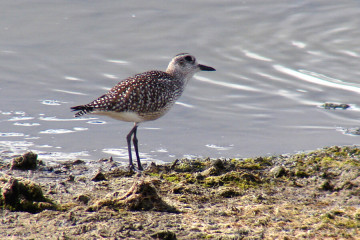
Black-bellied Plover
Pluvialis squatarola. Wears the black belly only for a few weeks either side of its summer absence from our region. Same species called Gray Plover in Europe.

Golden-crowned Sparrow
Zonotrichia atricapilla. Altitudinal migrants, start singing just prior to early spring departure. Distinctive crown patches allow for easy identification of the adult golden-crowned sparrow in breeding plumage.

Lincoln’s Sparrow
Melospiza lincolnii. Inconspicuous, secretive. Trimmer than the Song Sparrow with finer streaks. Pale gray overall; buffy brown-streaked breast is diagnostic. Broad gray eyebrow, whitish chin and eye ring; streaked head and back. Winters in brushy thickets. May form small flocks or associate with other sparrows. Photo by Matt Bongo
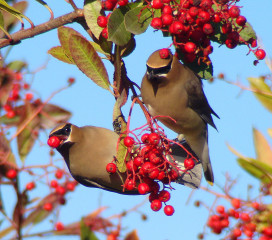
Cedar Waxwing
Bombycilla cedrorum. With a good look, a humbling beauty. Those red appendages of Cedar Waxwings increase in number and size as a bird ages: 0-5 waxy tips are presumable immature birds,, 9+ waxy tips are thought to be older. Wandering frugivores (fruit eater). Often with robins in winter.
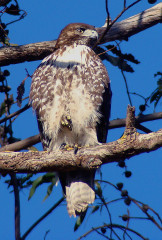
Red-tailed Hawk, light juvenile
Buteo jamaicensis. Adults have distinctive red tails. Our most common buteo (hawk/buzzard).
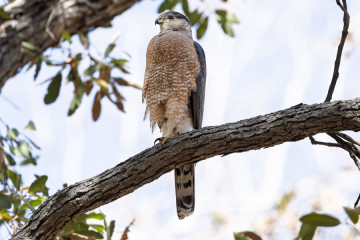
Cooper's Hawk
Accipiter cooperii. The Cooper's Hawk is sometimes described as a forest hawk because it can easily maneuver in and out and between trees. It's smaller than some other common hawks of our wetlands such as the Red-tail, and its flight is more flapping, less soaring. In the wetlands, look for it perched in a tree. It's about the same size as a crow. Photo by Tim Fleming.
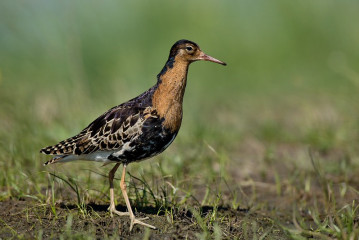
Ruff
Calidris pugnax. Breeds in bogs and wet grassy meadows across northern Eurasia; winters mainly in Africa but also across India and Southeast Asia. Ruffs gather in huge concentrations of up to one million birds on West African non-breeding grounds, and a few stray individuals visit North America each year. Photo by Andrej Chudy.

Unidentified Gulls
Gulls can be very hard to identify, primarily due to complex age-based plumages, frequent hybridization, and similar physical appearances. Most bird experts and communities on platforms like iNaturalist agree that gulls are among the most frustrating birds to tell apart.

Red-throated Loon
Gavia stellata. Found mostly along the coast, the Red-throated Loon occasionally visits lakes and rivers. Like all loons, it is a strong swimmer, built for diving, with webbing between its toes. Compared to other loons, it is smaller and lighter-weight and holds its bill tilted upward. The red patch is only present during breeding season. The name stellata is for a starry white pattern on its back, present in the non-breeding season. Photo by Donna Pomeroy.

Marbled Godwit
Limosa fedoa. Larger shorebird with long up-curving bill. They mainly eat insects and crustaceans, but also eat parts of aquatic plants.
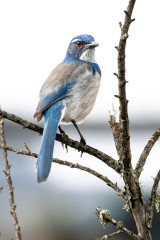
California Scrub-Jay
Aphelocoma californica. Mixed virtues: eats nestlings and tomato hornworms. Recent split from Western Scrub-Jay, the other is Woodhouse SJ, east of the Sierra Nevada. Photo by Tim Fleming.
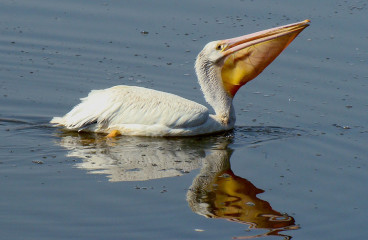
American White Pelican
Pelecanus erythrorhynchos. Feeds by dipping from the surface.
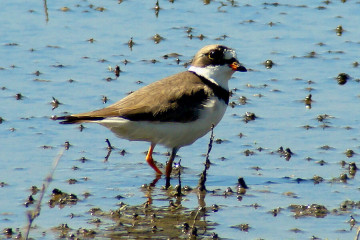
Semipalmated Plover
Charadrius semipalmatus. Looks similar to common Killdeer, but with only one breast-band.

Kumlien's Gull
Larus glaucoides kumlieni. Omnivore. A large gull that breeds in arctic Canada. considered a subspecies of Iceland gull by the American Ornithologists' Union

Mew Gull
Larus canus. Dainty wintering gulls. Usually some in the shallow vernal pond between the sewer plant and Lakeville Highway.

Peregrine Falcon
Falco peregrinus. Masters of the air, the Peregrine falcon has a distinctive black hood or "helmet". Sometimes seen hunting in the wetlands. On the verge of extinction 50 years ago, the peregrine has made a remarkable comeback thanks to government ban of DDT. Photo by Tim Fleming

Barn Owl
Tyto alba. It's been known to use the large nesting boxes at both Shollenberger and Ellis Creek to raise a family. Can hunt by sound in complete darkness. Alba means "white" in latin. Alaternate common name is monkey-faced owl.
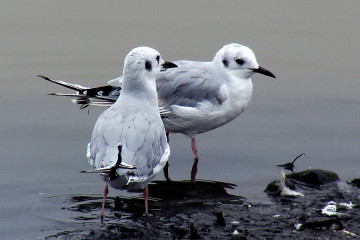
Bonaparte's Gull, non-breeding
Chroiocephalus philadelphia. Small gull, lovely and tern like. Its short, thin bill is black, and its legs are orangish-red. Usually some in winter in the oxidation ponds next to Ellis Creek facility.

Solitary Sandpiper
Tringa solitaria. Another eastern sandpiper occasional in migration.
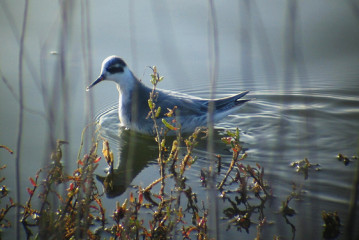
Red Phalarope
Phalaropus fulicarius. Occasional winter "shipwrecks" occur and Reds will be found at many inland locations. They're otherwise quite pelagic (occur over open water).

Ring-necked Duck
Aythya collaris. A relatively small duck with a tall peaked crown and no obvious neck ring, despite the name. Males are handsome with glossy black head and back. Females are grayish-brown with a white eye ring. Both sexes have a white band near the tip of gray bill. Photo by Tim Fleming
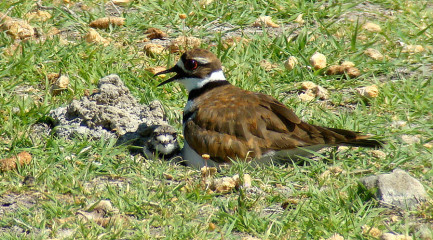
Killdeer with freshly-hatched chick
Charadrius vociferus. Likes to nest in shallow depression sometimes on trail -be careful!
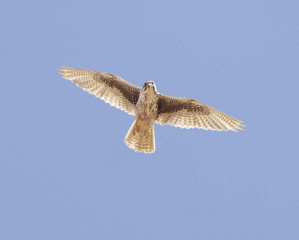
Prairie Falcon
Falco mexicanus. A rare visitor to our wetlands, the Prairie Falcon is known to winter in Sonoma County. Same size as the often-seen Peregrine Falcon, the Prairie Falcon may be distinguished by its all-over lighter brown and buff plumage. Instead of the Peregrine's dark "helmet", it has a long "mustache". Looking up at it in flight, notice the dark wingpits; other North American falcons don't have those. Photo by Russ Namitz.
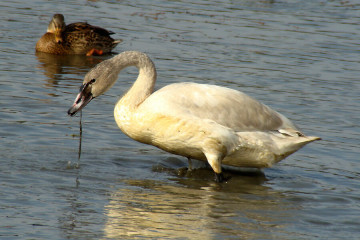
Tundra Swan, juvenile
Cygnus columbianus. Native swans and actic breeder has a black bill and curved neck compared to and can be confused with the nonnative Mute Swan, which has pink to orange bill with yellow dash before the eye and straight neck. Tundra swans have black bill. Occasional solo birds visit in winter, usually bullied away by Mutes. A first year bird wintered in Ellis Creek '09-10.
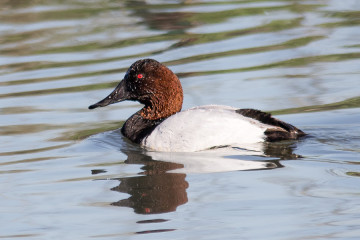
Canvasback
Aythya valisineria. Handsome "horse-headed" pochard. The species name valisineria alludes to the wild celery they eat on their breeding grounds, the North America prairie potholes. The canvasback has a distinctive wedge-shaped head and long graceful neck. Photo by Tim Fleming.
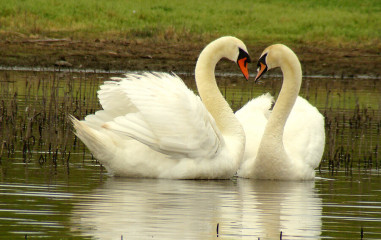
Mute Swan, still classified as non-native
Cygnus olor. Nonnative invasive species from Europe has a pink to orange bill and straight neck compared to native Tundra Swan which has black bill and curved neck. Seen in many local community ponds. Dominates native swans and geese, kill their young, and take over their territory.
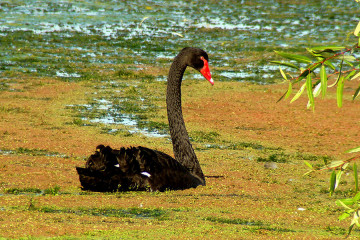
Black Swan, exotic, non-native
Cygnus atratus. One off escapee some years back wintered in the wetlands. A native of Australasia.
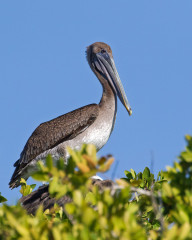
Brown Pelican
Pelecanus occidentalis. Feeds by diving. Post-breeding summer sojourner locally from Sea of Cortez breeding site. Photo by Tim Fleming.

Wilson's Snipe
Gallinago delicata. An elusive bird, usually seen as it flushes from grasses or sedges, escaping in rapid, zigzag flight. Winter only, disappears in wet grass.
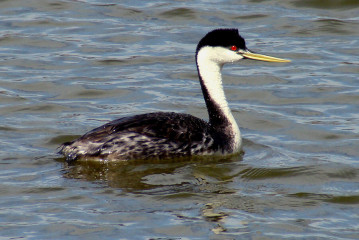
Western grebe
Aechmophorus occidentalis. Look for it swimming and diving on the Petaluma River. Its bill is olive-colored and its eye is in the black area of its face.
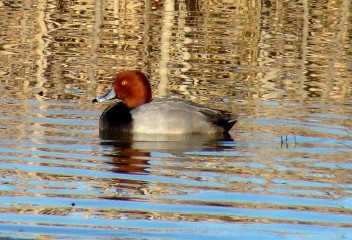
Redhead male
Aythya americana. These seem to have shifted wintering range and are now very scarce on the coast; easier to find east of us. Male has copper colored head and bright blue bill during the breeding season.

Eurasian Wigeon
Eurasian Wigeon male (right) with American Wigeon female (left)
(Anas penelope). A dabbling duck searching for plant food. Increasing in our area, but still scarce. Hybrids with American Wigeon occur.
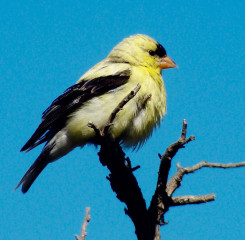
American Goldfinch
Spinus tristis. Common, smaller than sparrow. Most moisture loving of 3 California goldfinches. Migrate in compact flocks.
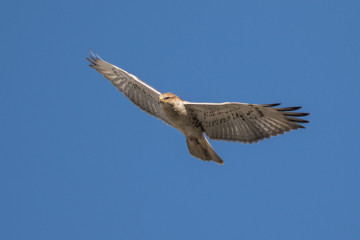
Ferruginous Hawk
Buteo regalis. Our largest buteo (hawk), to be looked for in open areas in winter.
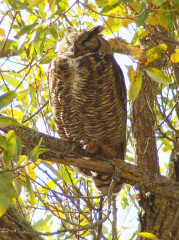
Great horned Owl
Bubo virginianus. Common and dominant nocturnal predator. An apex predator. Nobody preys on it!
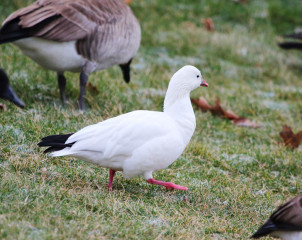
Ross's Goose
Ross’s goose (Anser rossii) is North America's smallest white goose, measuring 21 to 25 inches long with a 3.8 to 4.5-foot wingspan. Adults feature bright white plumage, black wingtips, pink legs, and a short, stubby pink bill that lacks the black "grin patch" seen on larger snow geese.
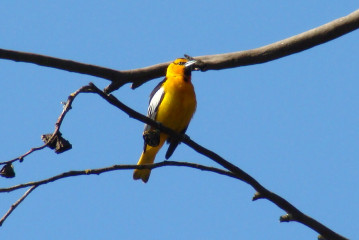
Bullock's Oriole
Icterus bullockii. Builds pendulous side-entry nests in tall riparian trees.
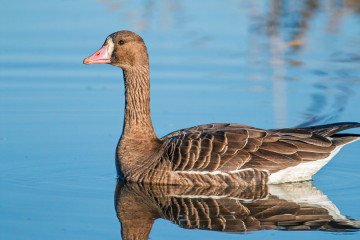
Greater White-fronted goose
Anser albifrons. The name albifrons comes from the Latin albus "white" and frons" forehead " due to its white feathers at the base of its bill. Large, grayish goose with orange legs, seen sometimes in winter at Ellis Creek. Migrate and breed in Alaska and North West Territories.
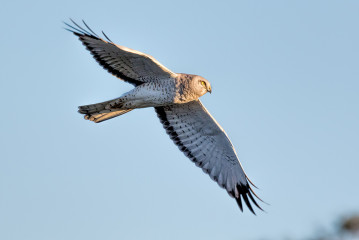
Northern Harrier
Circus cyaneus. Formerly called Marsh Hawk. Male shown. Female is much darker brown and tan. The genus name Circus is derived from Ancient Greek kirkos, meaning 'circle', referring to a bird of prey named for its circling flight. The specific cyaneus is Latin, meaning "dark-blue". These, are the one of the few raptorial birds known to practice polygyny – one male mates with several females. Up to 95% of the diet comprises small mammals. Photo by Tim Fleming.

Cinnamon Teal
Anas cyanoptera. A dabbling duck. The adult male has a rich cinnamon or copper-colored head, side and breast.

Cackling Goose
Branta hutchinsii. Cackling Goose, front with Canada Goose behind. Similar looking to Canada goose, but much smaller, with 4 small races defined. Large flocks pass over wetlands fall and late winter. Herbaceous.
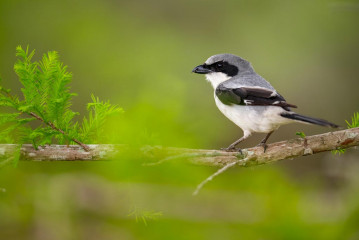
Loggerhead Shrike
Loggerhead Shrike
Lanius ludovicianus. The Loggerhead Shrike is a stocky, gray and white perching bird. Its head is large for its body with a black mask, also black accents on wings and tail. Shrikes actively hunt rodents, lizards and birds almost their same size. Since they lack strong talons, they impale their prey on thorns or barbed wire. The male's prowess at displaying impaled prey also serves to attract the female. Photo by Kyle Tansley.
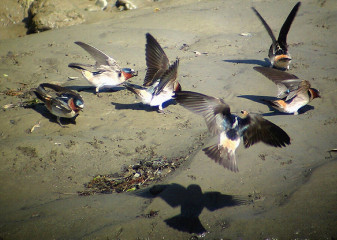
Cliff Swallows gathering nest material
Petrochelidon pyrrhonota. Sparrow sized, square tailed, with buff rump. Feed on small swarming insects, hence, their aerial acrobatics. Colonial nester wintering in Argentina.
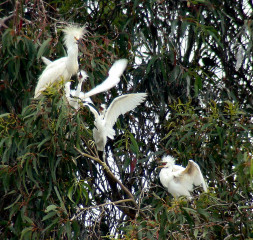
Snowy Egret with young
Egretta thula. Small egret with black bill, black legs, and yellow feet. Golden slipper" and usually black legs. Nests in colonies, sometimes with herons. A bird arriving at a nest to relieve its mate must perform an elaborate greeting ceremony to avoid being attacked as an intruder.
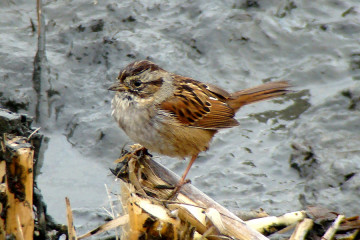
Swamp Sparrow
Melospiza georgiana. An eastern species wintering in small numbers in NorCal coastal marshes. It features a bright rusty-red crown and wings, a gray face, and a white throat. Winters in the southern US, feeding heavily on insects and seeds in shallow water. A few sightings have been made around Ellis Creek, but not every winter.

Willet
Tringa semipalmata. Rather drab, large, gray shorebird with straight bill. Willets nest on the ground, usually in well-hidden locations in short grass, often in colonies. These birds forage on mudflats or in shallow water, probing or picking up food by sight. They mainly eat insects, crustaceans and marine worms, but also eat some plant material.
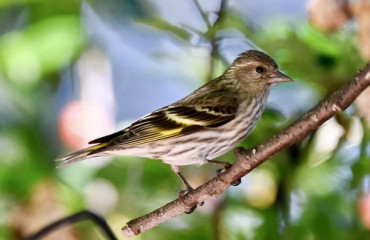
Pine Siskin
Spinus pinus. This brown streaked bird is related to the more common Lesser Goldfinch and American Goldfinch, with more subtle touches of yellow on the wings and tail. These birds are generally found in a flock, sometimes in the thousands. Photo by Dean Troi

Hooded Merganser, male
Lophodytes cucullatus. Truly beautiful male duck. Short range migrant. A diving predator that largely hunts by sight while under water. Population declines in the past have been linked with large scale deforestation. Because these waterfowl are cavity nesters, they require mature trees in which suitable nesting sites are likely to be found. Feeding behavior makes them prone to pollution toxicity.

Lesser Scaup, male
Aythya affinis. A small diving duck very similar to Greater Scaup. Fewer of these than Greater Scaup, usually in Oxidation Ponds in winter.
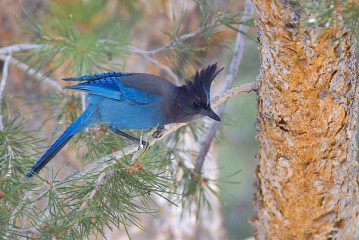
Steller's Jay
Steller's Jay (Cyanocitta stelleri) is a large, intelligent songbird native to western North America. Easily recognized by its dark black head, prominent pointed crest, and deep blue body, it is the only crested jay found west of the Rocky Mountains. Photo by Andrej Chudy.
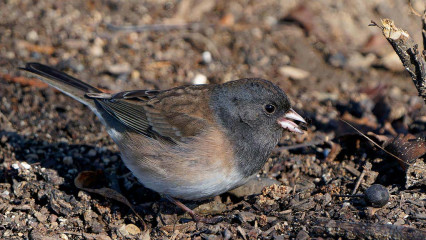
Dark-eyed Junco
Junco hyemalis. One of Northa America’s most common birds. A small sparrow, dark head with gray, plump body and pinkish bill. Flashes white tail feathers during flight. Females build nests shaped to their bodies. Forages on the ground for insects and seeds. Makes a ticking call as it flies into bushes. Photo by Patrick Bigelow

Short-billed Dowitcher
Limnodromus griseus. Less common than Long-billed Dowitcher, more spotting on breast.
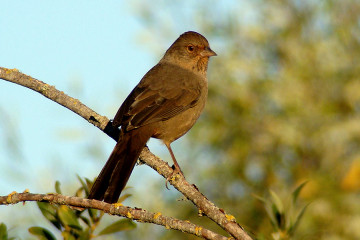
California Towhee
Melozone crissalis. Watch for it hop-scratching in the underbrush, kicking up leaves, as it looks for tasty millipedes. Listen for a sharp "Chip" sound. Formerly called Brown Towhee. Often found in pairs.
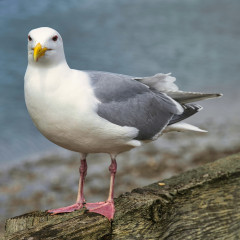
Herring Gull
Larus smithsonianus. (Now American Herring Gull) Large gull that frequents parking lots and boat docks. Adults are white and have gray back and wings, black wingtips with white spots, and pink legs. Juveniles can be difficult to identify because of changes during their first four years. They prefer drinking fresh water, but will settle for salty version. Photo by Townsend Walton

Western Meadowlark
Sturnella neglecta. Brightly colored, fearless behavior, with loud cheerful song. Will often post lookout.

Hooded Oriole
The brightly colored male hooded oriole (Icterus cucullatus) is a medium-sized bird that mostly breeds across the Southwestern United States and northern Mexico. They are infrequent visitors to our wetlands, so if you see one, count yourself as very lucky! Photo by Tim Fleming.
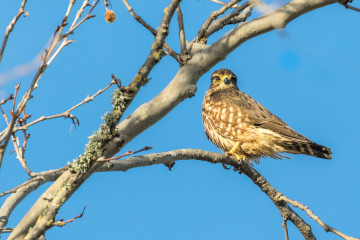
Merlin
Falco columbarius. A jay sized falcon best identified by its sudden absence - it is swift and aggressive. Feeds on smaller birds and follows migrations. Also called "Pigeon Hawk". Photo by Tim Fleming
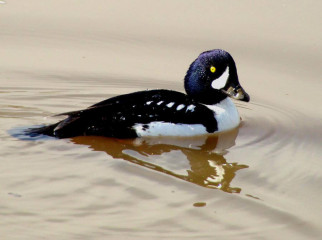
Barrow's Goldeneye
Bucephala islandica. Regular at Bahia in Novato, occasional locally. These diving birds forage underwater eating aquatic insects, crustaceans and pond vegetation.

Glaucous Gull
Larus hyperboreus. The adult Glaucous Gull stands out in the crowd due to its hefty size and snow white overall plumage with pale gray wings. Many stay in the Arctic year-round. Photo by John Bruin.
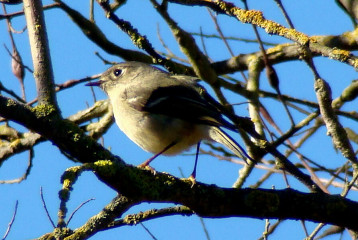
Ruby-crowned Kinglet
Regulus calendula. Usually solitary, small insectivore. Red crown often not raised.

Song Sparrow
Melospiza melodia. Year-round sparrow, with three-part song, thrive in human habitat. The songs are very crisp, clear, and precise, making them easily distinguishable by human ears. We have a particularly dark race endemic to San Pablo Bay pickleweed marshes. Adult song sparrows have brown upperparts with dark streaks on the back and are white underneath with dark streaking and a dark brown spot in the middle of the breast.
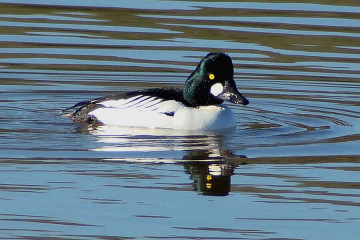
Common Goldeneye
Bucephala clangula. Male has white circles on cheeks. Has bulbous head like Bufflehead duck. Species is named for its golden-yellow eye. Their breeding habitat is the taiga.
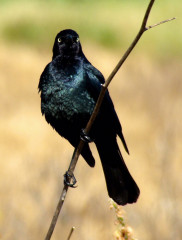
Brewer's Blackbird
Euphagus cyanocephalus. Male is solid black with irridecent purpleish-blue head. Look for the male's bright yellow eye. A social species and mixes with other black birds.

Rock Pigeon
The Rock Pigeon (Columba livia), also known as the Common Pigeon, is a stout bird in the dove family. Measures about 13 inches long with iridescent green and purple neck feathers. Native to Eurasia and North Africa, they now thrive worldwide. Photo by Imran Shah.